Race training · Multi-day and extreme duration
Cocodona 250 training: 253 miles from the Sonoran desert to Flagstaff
Darren Ware, ULTRALABS coach · updated · 8 minute read
- Distance
- 253.3 miles / 408 km, point to point
- Ascent · descent
- 38,791 ft / 11,820 m up · 33,884 ft / 10,330 m down
- Altitude
- 1,996 ft to 9,241 ft (610 to 2,817 m)
- Time limit
- 125 hours · 05:00 Monday start
- Water
- 4 L capacity required for the first 37 miles
- Sleep
- Bunks and cots at six stations, tents at two
- Finish rate
- About 72% (2026)
- Next edition
- 2 to 7 May 2027
- Entry
- Lottery · $1,995 to $2,095 · experience expected
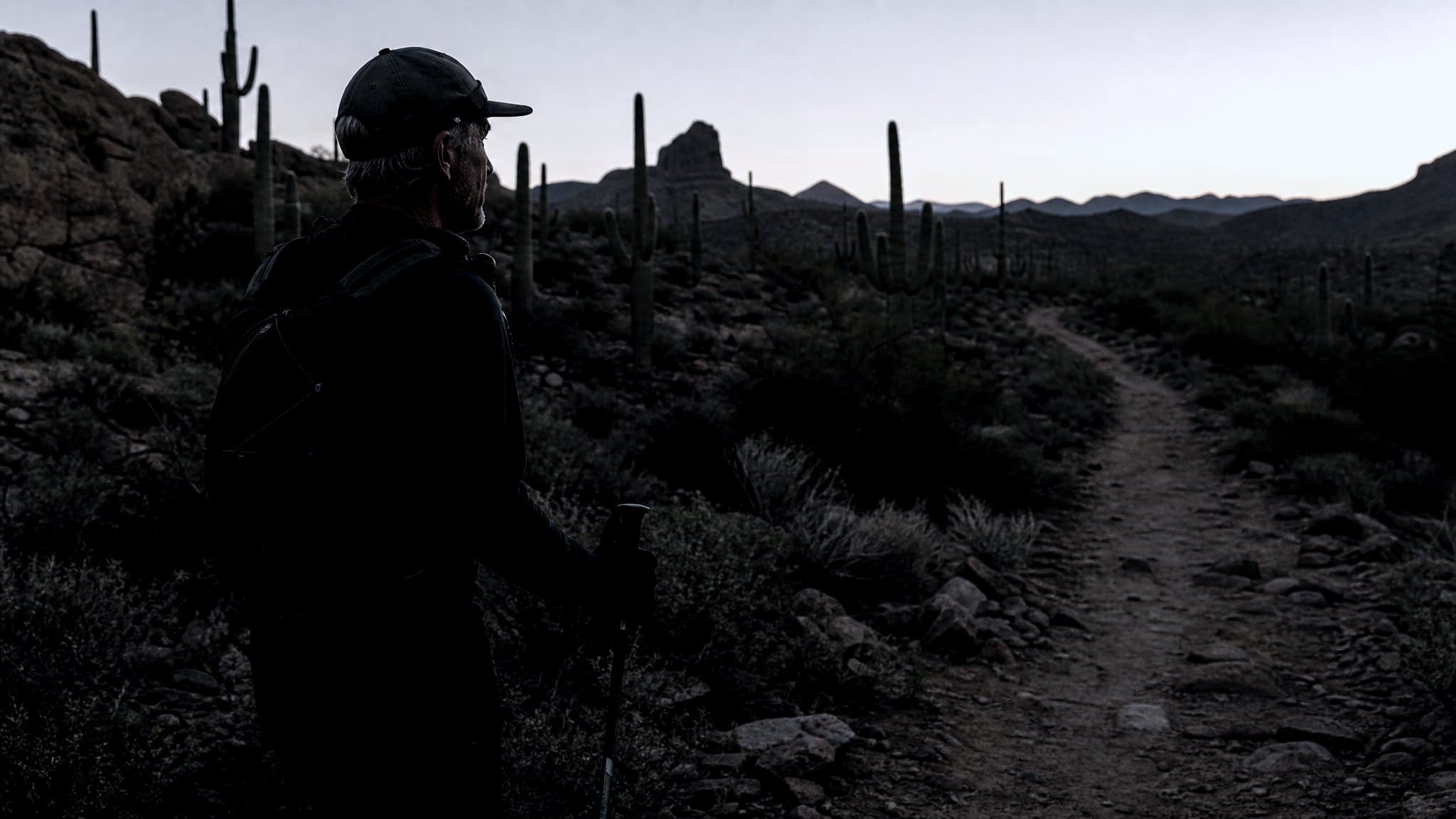
Cocodona runs 253 miles across Arizona from Black Canyon City to the square in Flagstaff, starting at five on a Monday morning in early May and closing at ten on the Saturday. It begins in Sonoran desert among cholla cactus at 2,000 feet, climbs through the Bradshaw Mountains to Crown King, crosses Mingus Mountain to Jerome and Sedona, and finishes on the Mogollon Rim at 7,000 feet, having touched 9,241. You climb 38,791 feet and sleep, if you sleep, in bunks at the aid stations. About seven in ten finish.
The organisers say the first 25 miles from Cottonwood Creek to Crown King are the hottest and hardest section, ten hours for the mid-pack, and they write "do not underestimate" in capitals. The race is decided there and in the fourth night, and almost nobody trains for either.
Day one is a desert race
You leave Cottonwood Creek at mile seven with four litres of water because the next aid is 30 miles and 5,000 feet of climbing away, through cactus, in heat the guide calls extreme. The heat note is the block that decides whether you arrive at Crown King able to continue, and the hydration note is the plan for four litres and a sweat rate you have measured. Carrying four litres uphill is a loaded-hiking problem, and the walking note covers it.
- Crown King, 36.6 mi, Mon 23:55
The desert section done. Most drops happen before here.
- Whiskey Row, Prescott, 75.6 mi, Tue 22:00
First real sleep for most. Pacers can join.
- Mingus Mountain, 107 mi, Wed 13:00
The high ground and the cold nights begin.
- Sedona, 159 mi, Thu 12:00
Red rock, heat again by day, the third night behind you.
- Fort Tuthill, 211 mi, Fri 12:45
A mental status check at the aid station. Then Flagstaff.
- Heritage Square, 253.3 mi, Sat 10:00
125 hours.
Sleep, planned
Four nights out is beyond what any training run rehearses in full, so the plan is a system: a ninety-minute to three-hour sleep at the bunk stations on a schedule set before the race, a crew or pacer who enforces it, caffeine held for the hours before dawn, and the acceptance that a planned sleep loses less time than the wander that follows a skipped one. The night note covers the block and the sleep banking. The guide's mental status check at Fort Tuthill exists because runners at mile 211 are not always safe to continue; the plan aims to pass it.
Forty degrees to below freezing
The low ground is extremely hot by day and the high ground extremely cold at night, in the organisers' words, with rain or snow possible at 9,000 feet in May. Kit is checked on the cold sections and the mandatory list runs from a space blanket to an insulated layer and waterproofs. Layering changes are rehearsed until they happen without thought, because at 3 am on Mingus Mountain thought is what you have least of.
Feet and pack
Two hundred and fifty miles of dusty double-track macerates feet. The guide recommends sock changes every 20 to 30 miles and the plan makes that a habit in training, along with taping and the shoe a half size up. The pack carries four litres and the cold kit, so the loaded walking is trained at race weight from the middle of the build.
Where durability shows up
Watch data across five days is a diary, so the durability reads in a Cocodona build come from the long loaded days and the back-to-back weekends beforehand: easy-pace heart rate through the heat block, uphill walking speed loaded, and how the legs descend on the second day. Recovery after the biggest weekends tells me whether the work is being absorbed. Then I decide what the next block holds.
The build
The lottery is in the autumn for May. A winter of capped easy volume and two strength sessions; a spring of long loaded hikes with poles, back-to-back and three-day weekends, descents progressed, an overnight rehearsal with a planned nap in it, a foot routine; then a three-week heat block into the taper, with the sleep banked. Altitude at 9,000 feet is felt on tired legs but is not the limiter.
What I watch
- Easy-pace heart rate through the heat block.
- Sweat rate and sodium on hot long hikes, carrying four litres.
- Uphill walking speed at the easy cap, loaded, over the build.
- Descending on the second and third day of multi-day weekends.
- Sleep in the fortnight before, and how the overnight rehearsal and nap went.
- Feet after long dusty days, and whether the sock changes are being done.
Facts checked September 2026 against aravaiparunning.com and the 2026 runner guide: 253.3 miles, 38,791 ft of gain and 33,884 ft of loss, 1,996 to 9,241 ft, a 125-hour limit with the cut-offs above, four litres of water capacity required leaving Cottonwood Creek, the sleep stations, pacers from Whiskey Row, the mandatory kit, a mental status check at Fort Tuthill, and a lottery with fees of $1,995 to $2,095 for 2027 on 2 to 7 May. The 2026 finish rate of about 72% is from results listings rather than the organiser; temperatures are the guide's own words rather than figures. Evidence level: the heat, sleep and walking physiology matches the field notes; the demands are the race's own.
Drawn for Cocodona?
Tell me your longest continuous effort and how you cope with heat and sleep loss.