Field notes · Fuelling
Drink to thirst, salt by sweat, stop guessing
Darren Ware, ULTRALABS coach · · 5 minute read
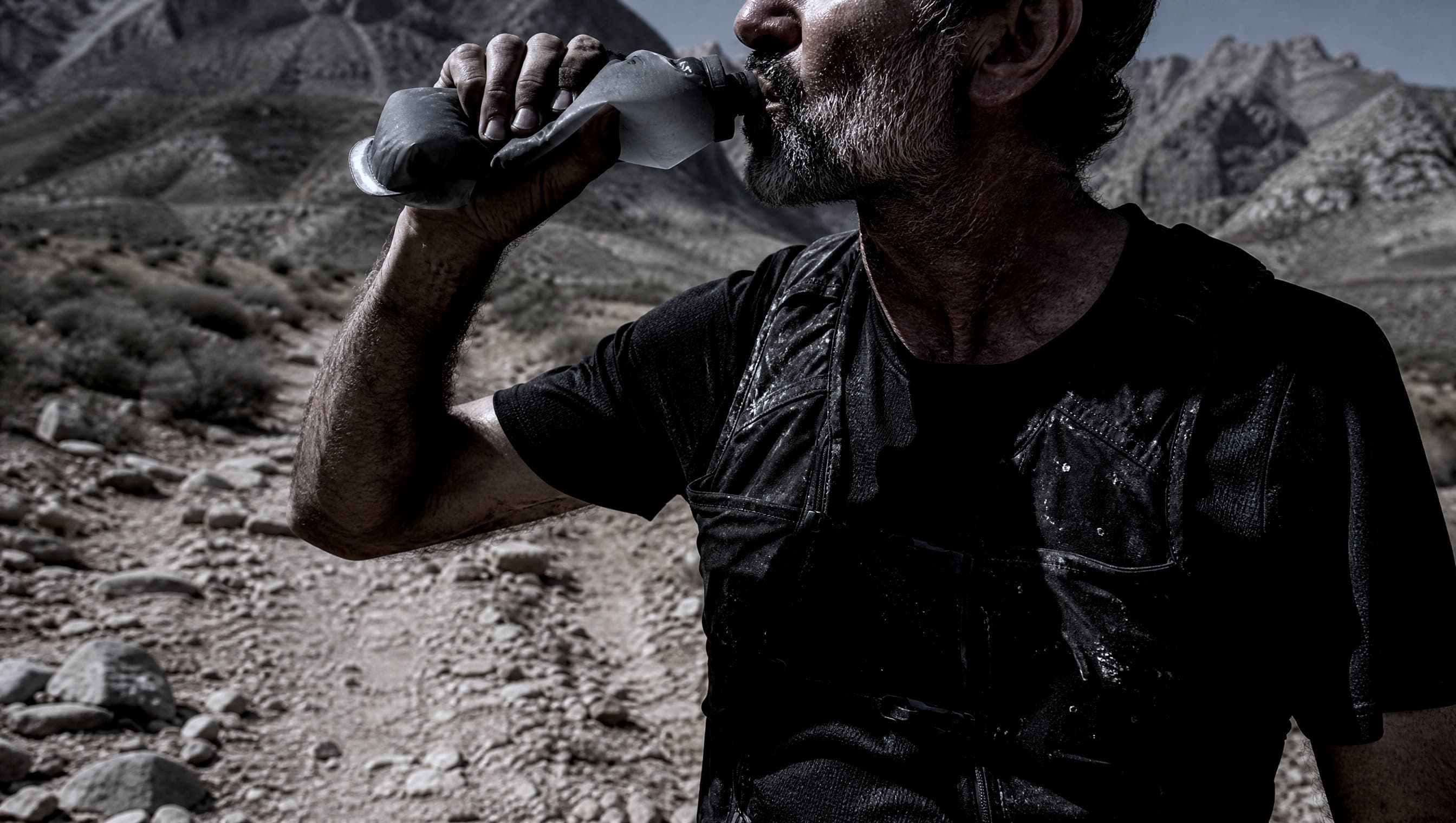
The advice most runners over 40 grew up with was to drink ahead of thirst. In an ultra that advice has put people in hospital. Drinking more water than you lose dilutes the sodium in your blood, and the low-sodium state that follows is the fluid problem that kills, not dehydration.
Drink to thirst
The consensus position from the exercise-associated hyponatraemia guidelines is plain: drink when thirsty, stop when not. For most athletes in most races that lands between about 400 and 800 ml an hour, with wide variation. Losing two or three percent of body weight over a long day is normal and tolerated. Gaining weight during a race is the warning sign.
What sodium is actually for
Sodium replaces some of what you sweat out and helps the fluid you drink stay where it belongs. It does not protect you from over-drinking; only drinking less does that, and in a hot 161 km race the runners who took the most salt were no less likely to end up with low blood sodium. Sweat sodium varies enormously between people, from roughly 200 mg to over 2,000 mg per litre, which is why a blanket salt-tablet rule fits nobody. Sodium does not prevent cramp either: in the same race, crampers and non-crampers took the same salt and finished with the same blood sodium. What the crampers had was a history of cramping and more muscle damage. Cramp tracks fatigue, not salt.
How I set it
- Weigh before and after two or three long runs in race-like conditions, note what you drank, and you have your sweat rate for that weather.
- Salt marks on the vest and stinging eyes point to a saltier sweater; a sweat test settles it if the race is long or hot enough to matter.
- Practise the race-day mix on the long runs, the same way the carbohydrate is practised. The gut has to learn the fluid too.
- In heat, drink more because you are thirstier, not because the clock says so. The heat note covers the rest.
What I watch
- Fluid per hour and sodium per hour from the check-in after every long run, against the conditions that day.
- Weight change across the long runs where the athlete weighs in.
- Late-run heart-rate drift, which rises with dehydration but also with heat, pace and fuelling, so I read it with the rest.
- Gut symptoms, because fluid volume is the most common cause of a stomach that stops working.
Fuel and fluid are rehearsed together. The carbohydrate side is in the carbs note; the desert version, where water is rationed by the organisers, is in the Marathon des Sables guide.
Evidence level: drinking to thirst and the dangers of over-drinking are the position of the 2015 international exercise-associated hyponatraemia consensus. The cramp and salt findings are from Hoffman and Stuempfle's studies at the 161 km Western States run (2015), observational, a few hundred runners. Sweat sodium ranges are from Baker's 2017 review of sweat testing. Per-hour figures are typical ranges, not prescriptions, and none of this is medical advice.
Want this applied to your race?
Tell me what you're training for and where things break down.