
Build legs that last.
Adaptive ultra coaching for runners 40+.
Build the aerobic engine. Strengthen the legs. Train your gut. Prepare for heat, hills and long hours on tired legs.
Durability combines coaching, training data and adaptive planning to help you keep moving when the race gets hard.
- 40+ focused
- Built for experienced runners
- Adaptive
- Your training informs the plan
- Coach-led
- Technology supports the decisions
- Race specific
- Built around your event
The Durability system
This isn't a training plan.
It's a coaching system that changes with your training.
Your race gives us the destination.
Your training history gives us the starting point.
Then Durability continually builds a picture of what you are actually doing, not what a spreadsheet says you should be doing.
MDS · 34 weeks out · week 1 of 34 · Durability Base 0/14 · starts 31 Aug 2026
- Last long run (27 Aug 2026) decoupled 6.3%. Borderline. Keep the long run easy and let it settle under 5% before any intensity.
- 3 of 3 easy runs this week breached the 126 bpm cap. The cap is a ceiling. Slow down until it holds.
Some drift late in the long run. Keep the volume easy and aerobic.
Heart-rate load from your synced runs. Chronic is roughly the last six weeks, acute roughly the last week, balance the difference.
Baseline building · 21 days of usable data. Chronic load needs months of history; acute load is established.
Recent training load is below your longer-term average. As of this morning.
The athlete dashboard. The numbers are from my own preparation, August 2026.
- PlanTraining built around you.
- Your race, current volume, available days, long-run history and experience shape the starting plan.
- TrackSee what is actually happening.
- Training volume, long-run progression, intensity, heart-rate discipline, strength work and completed sessions build your athlete picture.
- AdaptThe plan moves when you do.
- Miss training. Complete more than expected. Struggle with a block. Progress faster than expected. The plan shouldn't blindly carry on.
- CoachData informs the decision. A coach makes it.
- Durability isn't an AI pretending to know everything about you. The platform gives us better information to make better coaching decisions.
When there isn't enough data, we don't pretend there is.
New athletes start conservatively.
As training history builds, Durability learns more about your volume, consistency, long-run tolerance and response to training.
More evidence. Better decisions.
The real limiters
Fitness gets you there.
Durability keeps you moving.
Being aerobically fit is only part of ultra running.
Hours into an event, performance can start disappearing for very different reasons.
Durability trains what happens after "fit enough".
- Hour 1Everything works. Heart rate low, stride easy.
- Hour 3Muscular force starts to fade. Economy slips on the climbs.
- Hour 6Tendons and feet carry the cumulative load. Fuelling errors show up.
- Hour 10Heat, hydration and pacing decide whether you are still running.
- Muscular fatigue
- Your cardiovascular system can still feel capable while your legs lose the ability to produce force.
- Tissue tolerance
- Feet, calves, quads, tendons and connective tissue have to tolerate thousands of repeated impacts.
- Fuelling
- You need to absorb carbohydrate and fluid for hours, not just know what you should eat.
- Heat and environment
- Temperature, terrain, altitude, weather and equipment can completely change the demand of an event.
- Pacing
- A race can be compromised hours before you realise you've gone too hard.
What Durability actually trains
Build the complete ultra runner.
Aerobic control
Build the aerobic capacity to keep easy running genuinely easy and sustainable.
Muscular durability
Develop the ability to maintain movement quality and output as fatigue accumulates.
Strength
Build stronger legs and improve your ability to tolerate repeated loading.
Race specificity
Prepare for the terrain, climbing, descending, duration, pack and conditions you will actually face.
Fuel and heat
Practise carbohydrate intake, hydration, sodium strategy and environmental preparation before race day.
Recovery and load
Progress training without continually digging a hole you can't recover from.
The objective isn't one heroic training week. It's months of repeatable work.
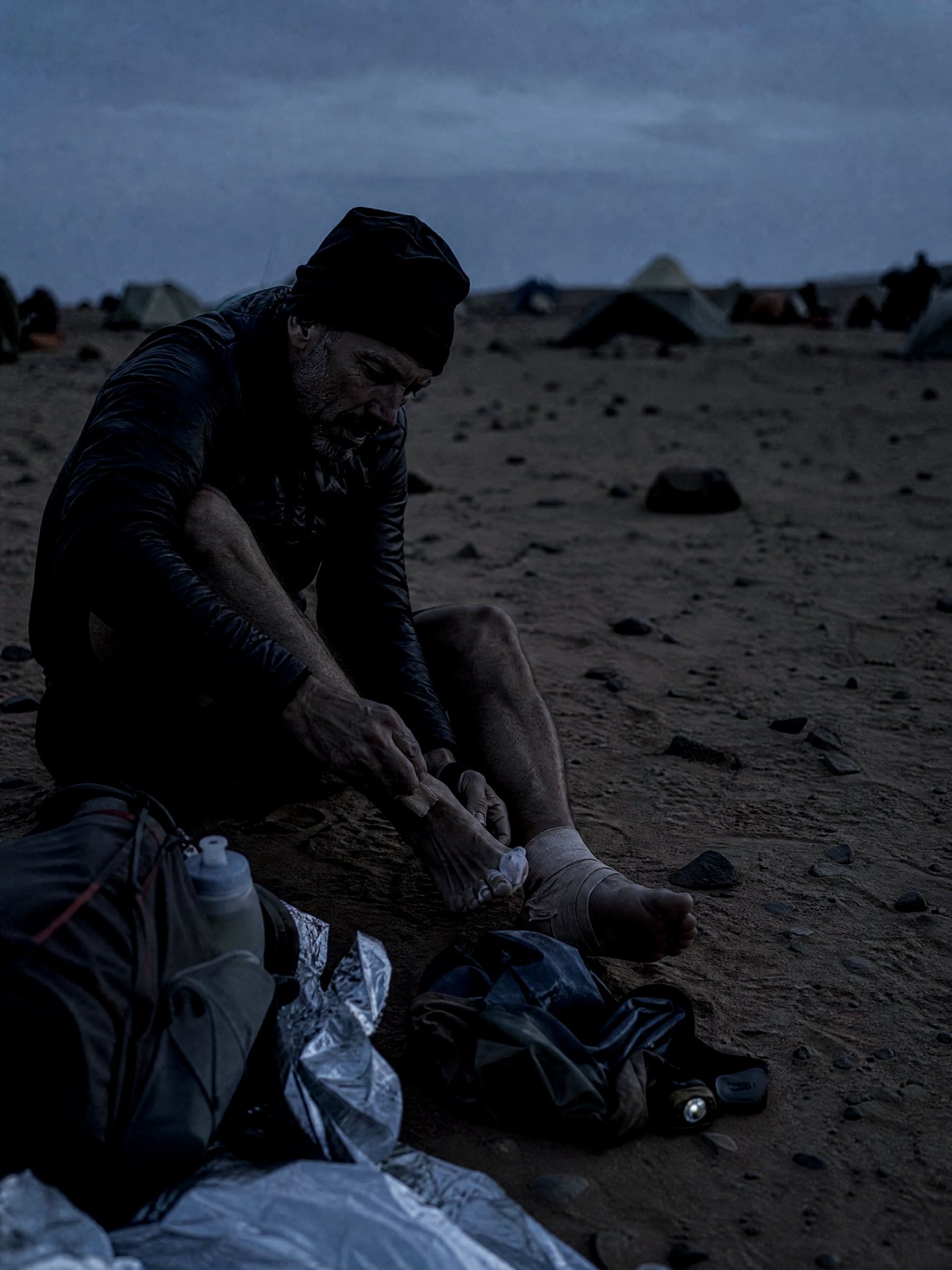
Darren Ware, founder and coach
Founder-led
I completed the Marathon des Sables in 2003.
In 2027, aged 52, I'm going back.
But Durability isn't a Marathon des Sables programme.
It's being built for runners preparing for ultramarathons, mountain races, multi-day events, desert races and long endurance challenges around the world.
The MdS is simply my proving ground.
I'm using the same training principles, the same platform and the same decision-making framework that I use with Durability athletes.
Aerobic development. Strength. Long-run progression. Fuelling. Heat. Recovery. Fatigue resistance.
I'm not coaching it from the sidelines.
I'm testing it on myself.
Everything has to survive the desert.
Part of Ultralabs
Training is only one part of endurance performance.
Durability is the coaching and training system within ULTRALABS, a performance brand focused on what helps endurance athletes keep moving for longer.
- Training
- Fuelling
- Hydration
- Heat
- Recovery
- Testing
The same principle applies to everything we build:
Solve the problem first.
Test it in the real world.
How the system works
The plan follows the athlete.
Not the spreadsheet.
01 / Build
We start with your race, training history, current mileage, available time and recent long-run exposure.
ApprovedThis week · 31 Aug 2026Open- MonEasy run8 km
- TueEasy run10 km
- WedStrength (heavy lower)·
- ThuEasy run10 km
- FriStrength (upper/core)·
- SatRest
- SunLong run18 km
Drag a session to another day, or use the arrows. Days swap. Distances and session types stay as planned.02 / Train
You follow the programme and record what actually happens.
RecordedThis weekFlagHR cap discipline3/3easy runs breached 126 bpmBorderlineLast long run drift6.3%long run on 27 AugSteadyRecoverysteadyRHR 55.9 · HRV 38.4 · sleep 7.1 hSyncedLast week46km synced · Mon to SunWhat this week means03 / Learn
Durability builds a clearer picture from completed training, consistency and your response.
Coverage 40%Training load · last 6 weeksas of this morningHeart-rate load from your synced runs. Chronic is roughly the last six weeks, acute roughly the last week, balance the difference.
Baseline building · 21 days of usable data. Chronic load needs months of history; acute load is established.
Chronic load108Building · 40%Acute load98EstablishedLoad balance+10BuildingRecent training load is below your longer-term average. As of this morning.
What training load means04 / Adapt
Volume, long runs, intensity, recovery and race-specific work can change as the evidence changes.
AdjustedNext week · 7 Sept 2026 · 49 kmProvisional- MonStrength (upper/core)·
- TueStrength (heavy lower)·
- WedEasy run10 km
- ThuAerobic run13 km
- FriRest
- SatRest
- SunLong run26 km
Your recent training supports a small step up: 49 km this week. Long run 26 km. The long run builds from what you have run recently.05 / Progress
The objective is simple:
Arrive at race day able to keep producing when everybody else is starting to fade.
ReviewedAerobic pace trend · last 6 weeksflat · moderate confidenceTracks your pace on comparable easy runs at a similar heart rate. Getting faster at the same effort over time is a sign of improving aerobic efficiency.
What the aerobic pace trend means
Training doesn't happen in a laboratory.
- You miss sessions.
- Work gets busy.
- You travel.
- You get tired.
- Sometimes training goes better than expected.
A fixed 16-week PDF doesn't know any of that.
Durability does.
The goal isn't to constantly rewrite your programme.
It's to make sensible changes when the evidence says a change is needed.
The founding cohort
12 athletes. Maximum.
The first Durability cohort is intentionally small.
I want to know the athletes I'm coaching, understand what happens when the system meets real training and continue improving the platform through real-world use.
A deliberately small cohort.
Technology informs the coaching rather than replacing it.
Including my own return to the Marathon des Sables.
- Who
- Runners 40 plus, from a first ultra to multi-day desert and mountain races.
- Data
- Your Garmin or Coros through Intervals.icu. Heart rate, HRV, load and completion, read every week.
- Fee
- From £1,250 a month. Minimum six months. A place opens when an athlete crosses a finish line.
Durability might be for you if…
- You're 40+ and training for an ultra or long endurance event.
- You've already proved you can run, but want to stop falling apart late in races.
- You want structure without being chained to a generic plan.
- You want strength, fuelling and race preparation integrated into your running.
- You want to understand why you're doing the training.
- And you're prepared to train consistently rather than chase shortcuts.
Apply
What are you training for?
Tell me the race.
Tell me the date.
Tell me what you're preparing for, where you are now and what normally starts going wrong when the distance gets serious.
Training for an ultra?
Built around your race.
Durability can be used to prepare for mountain ultras, trail ultras, desert races, backyard ultras and multi-day endurance events.
- Marathon des Sables training
- UTMB training
- Western States 100 training
- Hardrock 100 training
- Badwater 135 training
- Spartathlon training
- Comrades Marathon training
- Dragon's Back Race training
- Cape Wrath Ultra training
- Montane Spine Race training
- Lakeland 100 training
- Arc of Attrition training
- South Downs Way 100 training
- West Highland Way Race training
- Centurion Thames Path 100 training
- Grand Union Canal Race training
- Leadville Trail 100 training
- Tor des Géants training
- Ultra-Trail Cape Town training
- Cocodona 250 training
Don't see your race?
Durability isn't built around a list of races. It's built around the demands of yours.
FAQ
Questions, answered plainly.
- What is Durability?
- Adaptive ultra coaching for runners aged 40 and over. It combines aerobic control, muscular durability, strength, race specificity, fuelling and heat preparation, and recovery and load management, delivered through a training platform that reads what you actually completed and adjusts the plan, with the coach approving every change.
- Is it only for the Marathon des Sables?
- No. Durability is built for ultramarathons, mountain races, multi-day events, desert races and long endurance challenges. The MdS is the founder's proving ground in 2027, not the programme.
- How is it different from a training plan?
- A plan is written once. Durability proposes each fortnight from the training you completed, how you are responding and what the race needs. Missed training is never repaid, over-training is not rewarded, and when there is not enough data the system starts conservatively and says so.
- Who makes the decisions?
- The coach. The platform reads your watch data, heart-rate discipline, long-run drift, training load and recovery, and proposes the next fortnight. Every change is approved by Darren before you see it.
- What data do you need?
- A Garmin or Coros watch synced through Intervals.icu. Heart rate on easy runs matters most. Runs without the watch can be added by hand.
- What does it cost?
- From £1,250 a month with a minimum of six months. Twelve places in the founding cohort. A place opens when an athlete crosses a finish line.
- Is 40 too old to start ultra running?
- No. Peak ultra performance sits in the late thirties to mid forties and strong results continue past 50. Training age and consistency matter more than birth year. A new runner at 42 needs a longer base than a 52 year old with 25 years of running.
- How does ultra training change after 40?
- Keep the aerobic volume you can sustain, keep one hard session a week, make everything else easy, lift twice a week, eat more protein, sleep more, and leave more room between demanding days. Do not simply train less.
- What is the safest way to build long runs?
- Keep the planned long run at or under about 110% of the longest run you completed in the last 30 days. In a 2025 study of 5,205 runners, single-run jumps beyond that carried substantially higher injury risk, while weekly mileage ratios did not predict injury. Durability holds this guardrail in every proposal.
- Do you coach mountain ultras, 100 milers and desert stage races?
- Yes. Durability prepares runners for trail and mountain ultras, 100 km and 100 mile races, desert and multi-day stage races and long endurance challenges. The plan is built around the demands of your race: terrain, climbing, duration, pack and conditions.
- How is this different from an AI training app?
- Durability is not an AI pretending to know everything about you. The platform reads your completed training and proposes the next fortnight; the coach reads the proposal, edits it, and approves it before you see it. Data informs the decision. A coach makes it.
- What happens if I miss training?
- The plan adapts. Missed training is never repaid with a bigger week, completing more than planned is not rewarded with a jump, and a lost week becomes a conservative restart rather than a penalty.