Field notes · Data
Why your watch says recovered when you aren't
Darren Ware, founder and coach · 31 August 2026 · 5 minute read
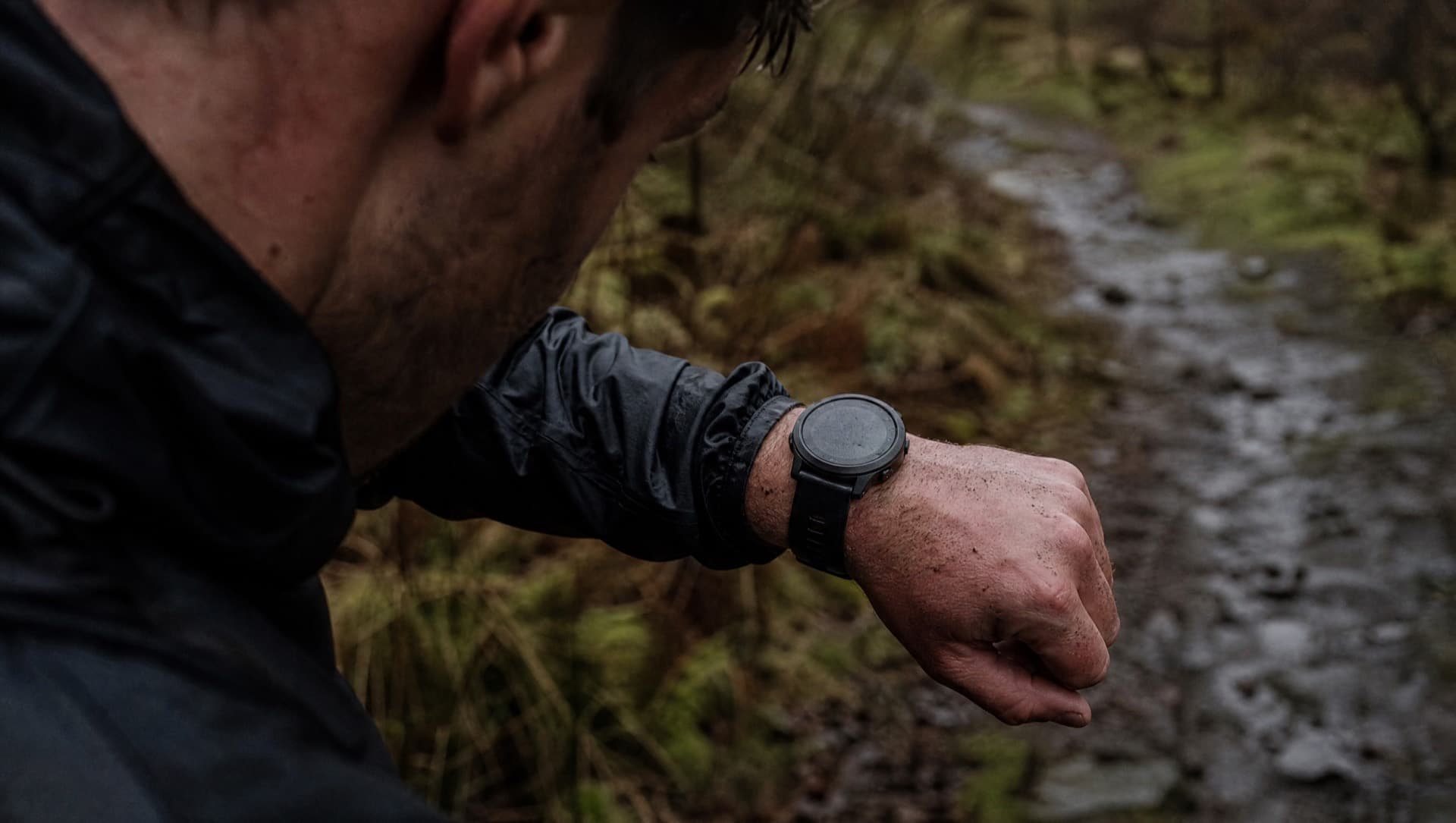
Your watch says 82. Your legs say no. Which one do I believe? Neither on its own.
This isn't an argument against watches. I want the data: heart-rate variability, resting heart rate, sleep, recent load. A recovery score sees a real slice of what's happening. What it doesn't know is that your calf started talking on yesterday's run, that you barely ate afterwards, that work was horrific, that your easy pace has been sliding for ten days, or that a technical descent billed your quads. The watch has information. So do you. I use both.
HRV is a trend, not an oracle
Heart-rate variability is worth tracking, and training guided by it has shown promise in some studies. But one morning's number moves with alcohol, a late meal, a poor night, even when and how you take the reading. What matters is your own baseline, how the trend sits against it, and how the training is actually going alongside it.
The problem with one score
A readiness score folds several signals into a single number through a formula you can't see. That makes it a useful summary and a poor dictator. Watch green, athlete feeling good: carry on. Watch orange, athlete feeling good, training landing normally: look at the context before cancelling anything. Watch green while the athlete is exhausted and key sessions are getting worse: the score doesn't get to overrule that.
What I watch
- Resting heart rate and HRV trend, where the athlete tracks them.
- Sleep trend, not one night.
- What the athlete reports: energy, soreness, motivation, niggles.
- Session effort against what that session normally costs.
- Pace at the expected effort, and the heart-rate response underneath it.
- Whether recent key sessions are improving or deteriorating.
- Life load: work, travel, family, illness.
I'm looking for agreement between signals. One bad metric changes nothing on its own. Several deteriorating together deserve attention.
When I change the session
- HRV low, athlete feels normal, warm-up feels normal, training progressing: we likely proceed, perhaps with a small trim.
- Watch says recovered, but sleep was poor, the legs are heavy and easy pace has fallen for several runs: the session changes, whatever the score says.
- Localised pain that's worsening, or a stride that's changing to protect something: not a recovery-score question. The aggravating load comes out and it gets looked at properly.
The number doesn't coach you
The number is information. My job is deciding what it means next to everything else you've done: the block you're in, the race you're aiming at, the way the last three weeks actually went. I want the watch data. I just don't want one number making the decision.
Evidence level: HRV and wearable recovery measures can provide useful longitudinal information, and HRV-guided training has shown promise in some studies. Performance effects at group level are small and inconsistent, which is why readings get interpreted alongside symptoms, subjective recovery and actual training performance.
Want this applied to your race?
Tell me what you're training for and where things break down.