Field notes · Heat
Heat training without a desert: hot baths, saunas and a two-week plan
Darren Ware, founder and coach · 29 August 2026 · 5 minute read
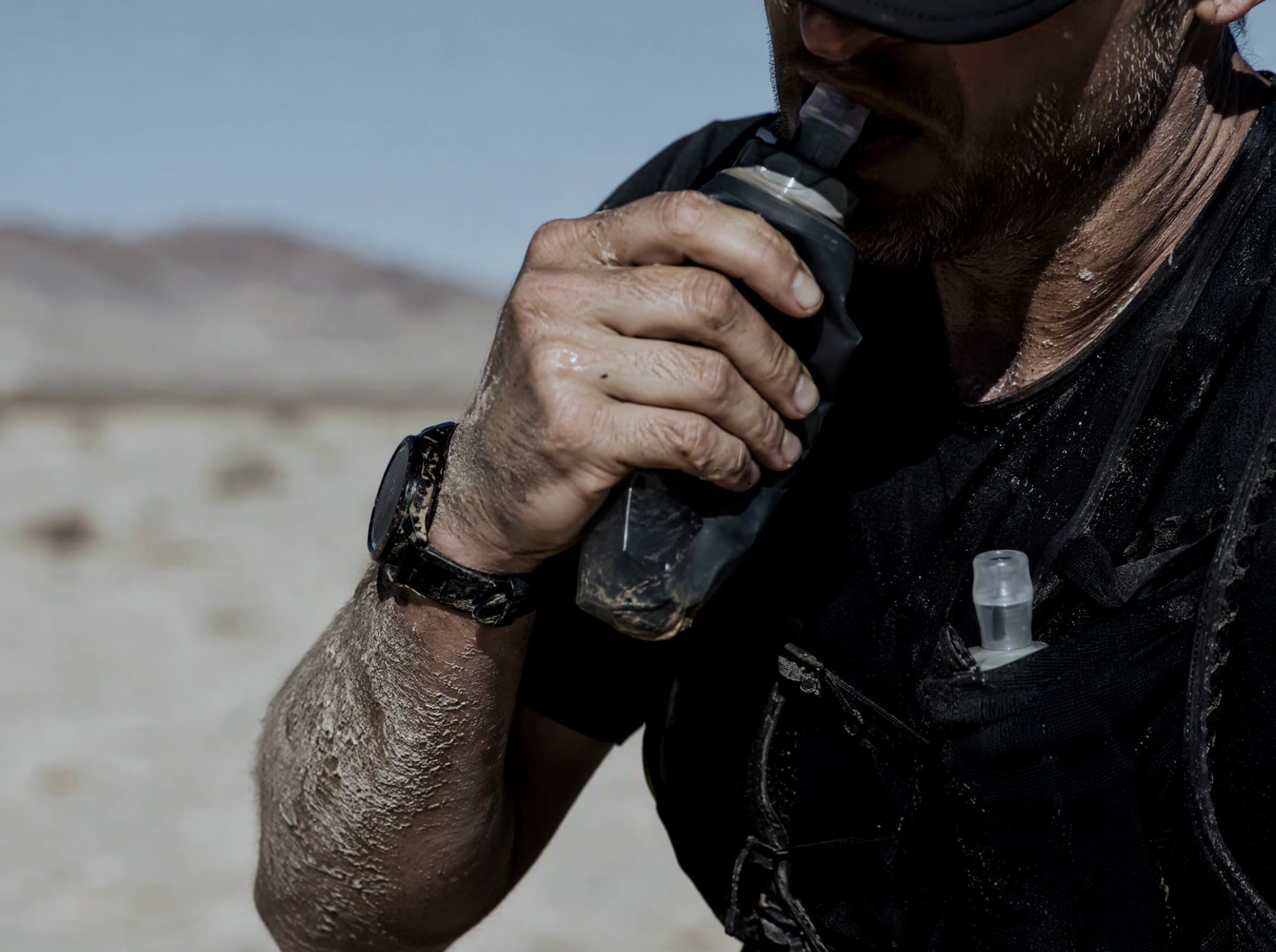
Heat can wreck a race even when the fitness is there. It raises your fuel burn, steals your fluid, drags your heart rate up and lowers the effort ceiling your brain will allow. And unlike the weather, your response to it is highly trainable.
What acclimatisation does
Within about two weeks of repeated heat exposure your plasma volume expands, your heart rate drops at a given effort, you start sweating earlier and more, and your sweat gets less salty. In one well-known study of trained cyclists, ten days of heat acclimatisation improved time-trial performance in cool conditions by about 6 percent. That's an unusually large result, not a promise of 6 percent for everybody. Even a fraction of it is worth having in a hot race.
No heat chamber needed
The gold standard is exercising in actual heat. But the practical versions work well, and they fit around a British summer:
- Post-run hot bath: around 40°C, up to 40 minutes, straight after training. Six consecutive days measurably reduced heat strain, and the adaptation held for at least two weeks.
- Post-run sauna: three weeks of regular sessions improved endurance markers through plasma volume expansion.
- Overdressed easy runs: crude but effective when neither is available.
The two-week block
- Days 1 to 3
First exposures: 20 to 30 minutes of bath or sauna after easy runs. Expect it to feel hard; that's the point.
- Days 4 to 9
Build to 30 to 40 minutes daily. Weigh yourself before and after runs; drink to thirst, and watch morning heart rate.
- Days 10 to 14
Full exposures, adaptation landing: lower heart rate, earlier sweat. Re-rehearse your fluid and sodium plan in the heat, because your sweat has changed.
- 2 to 3 days out
Stop. Fatigue clears, adaptation stays. Top up once or twice a week if the race is further out.
The safety lines
- Heat illness risk tends to rise with age, and individual responses vary a lot. Cap durations, never do the first exposures after your hardest sessions, and get out at dizziness or nausea.
- Stay hydrated during the block; training your heat response doesn't require dehydrating yourself.
- Re-test your race fluids in the heat. A sweat rate measured at 21°C does not transfer to 40°C.
What I watch
- Heart rate at a repeatable easy effort, before and through the block.
- How each repeated exposure lands compared with the last.
- Sweat and fluid requirements in conditions close to the race.
- Whether the athlete is adapting, or just accumulating heat fatigue.
Evidence level: heat acclimatisation physiology and the hot-bath and sauna protocols are supported by controlled trials. Exact durations are protocol design; the finishing window matters because short protocols decay within about two weeks.
Want this applied to your race?
Tell me what you're training for and where things break down.