Field notes · Racing
Running through the night: sleep, light and the 3 am low
Darren Ware, ULTRALABS coach · · 6 minute read
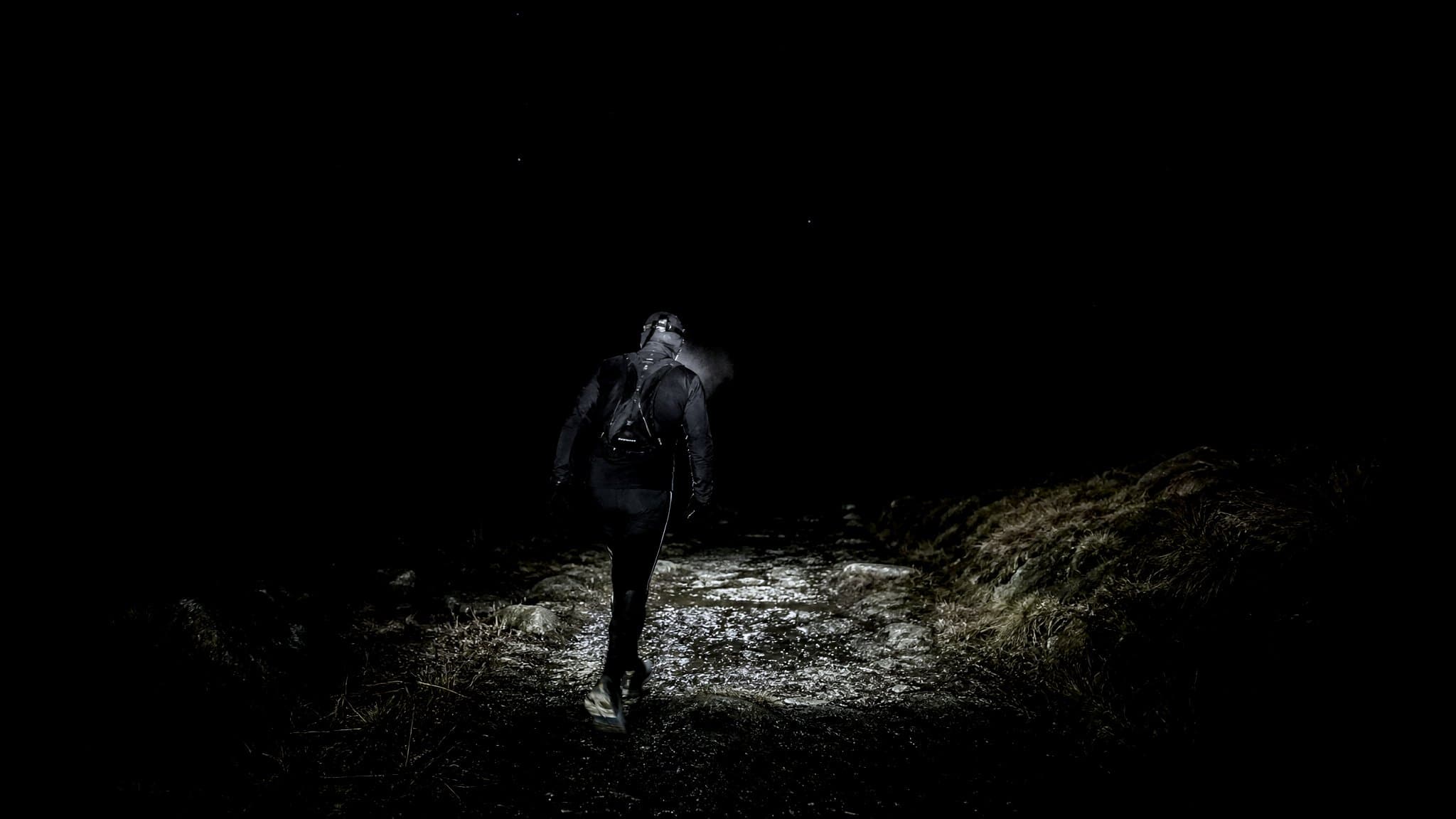
A hundred-mile race is a day run, then a night run, then whatever is left of you the next morning. The Spine is several nights. Almost everybody trains for the day and hopes about the night. The night is where the field spreads out.
What one night without sleep does
- Reaction time and decision quality fall through the night and bottom out around 3 to 5 am, on the body's own low point, whatever you did in training.
- Perceived effort rises. The same pace feels harder, so tired runners slow down more than their legs require.
- Body temperature drops in the small hours. Layers that were fine at midnight are not enough at four.
- Appetite disappears. Fuelling errors cluster in the night and show up as the morning crash.
- Nausea, hallucinated shapes at the edge of the torch beam and small navigation errors are normal. Knowing they are normal is most of the defence.
What I do about it
- 6 weeks out
Long run starts before dawn: two hours in the dark, then daylight. Torch, layers and fuelling practised cold.
- 4 weeks out
Evening-into-night run on race terrain, four to five hours, finishing around midnight. Navigation and kit changes rehearsed.
- 3 weeks out
Sleep banking begins: an extra 30 to 60 minutes a night, kept through the taper. The one intervention with decent evidence behind it.
- 2 weeks out
Caffeine kept modest, mainly for sleep. Race caffeine plan written: small doses through the night, first one before the low, not during it.
- Race
Eat by the clock, not by appetite. Layer before the cold arrives. A 15-minute checkpoint sleep is not weakness; on the Spine it is the whole strategy.
Sleep banking and caffeine
Extending sleep for a week before a night without it protects attention and reaction speed through the deprivation, in the laboratory study that tested it: six nights of about 90 minutes extra, fourteen men, fewer lapses at 3 am. Nobody has run the trial on a hundred-mile race, so the performance gain is an inference, and a cheap one. It is the cheapest thing you can do for a hundred and hardly anybody does it. Caffeine works. Whether cutting back beforehand makes it work better is contested: the best trial on the question found regular coffee drinkers got the same boost as everyone else. I still ask athletes to keep the dose modest in the last fortnight, for the sleep more than the race.
What I watch
- Pace and heart rate through the dark hours of the rehearsal runs, against the same athlete in daylight.
- What was eaten between midnight and dawn, from the check-in, because that is the first thing to slip.
- Sleep in the fortnight before the race, measured where the athlete tracks it.
- Whether the layers, the torch and the food came out on time in rehearsal, or only once it went wrong.
The races where this decides finishes are in the guides: Lakeland 100, Arc of Attrition and, for several nights in a row, the Spine Race. Reading recovery in the days after is in the watch note.
Evidence level: meta-analyses from 2022 to 2025 put the effect of a night's sleep loss on endurance performance at moderate, with longer efforts hit harder and perceived exertion raised. Sleep banking rests on Arnal and colleagues' 2015 crossover study of fourteen men, which measured vigilance, not running. Caffeine's benefit for endurance is well supported; a 2017 trial in forty trained cyclists found habitual intake made no difference to the boost, so the case for a pre-race reduction rests on sleep, not performance. The block above is coaching practice.
Want this applied to your race?
Tell me what you're training for and where things break down.