Race training · 100 miles and long trail
Lakeland 100 training: 105 unmarked fell miles through the night
Darren Ware, founder and coach · updated 2 September 2026 · 7 minute read
- Distance
- 105 miles / 169 km
- Ascent
- 6,300 m (official)
- Time limit
- 40 hours
- Start
- 18:00 Friday, Coniston loop
- Navigation
- Unmarked, roadbook + map
- Drop bag
- One, at Dalemain (mile 59)
- Finish rate
- ≈63% (2026)
- Entry
- Ballot · qualifier required
The Lakeland 100, the Ultra Tour of the Lake District, is a 105-mile loop from Coniston with 6,300 m of ascent, starting at six on a Friday evening and unmarked the whole way. You get a roadbook and a map; you find the route yourself. Around six in ten starters finish inside the 40-hour limit.
The night starts before you're tired
The 18:00 start is deliberate and it's the character of the race: you're on the fells, navigating, within a few hours of the gun, straight into the first night while still relatively fresh. That rewards runners who've done real night navigation and punishes those who've only run marked daytime races. The route can't be followed on feel; a wrong line in the dark on the fells costs time, extra climbing and confidence. Night fell navigation is a trained skill, and the Lakeland assumes you have it.
Fell running, not trail running
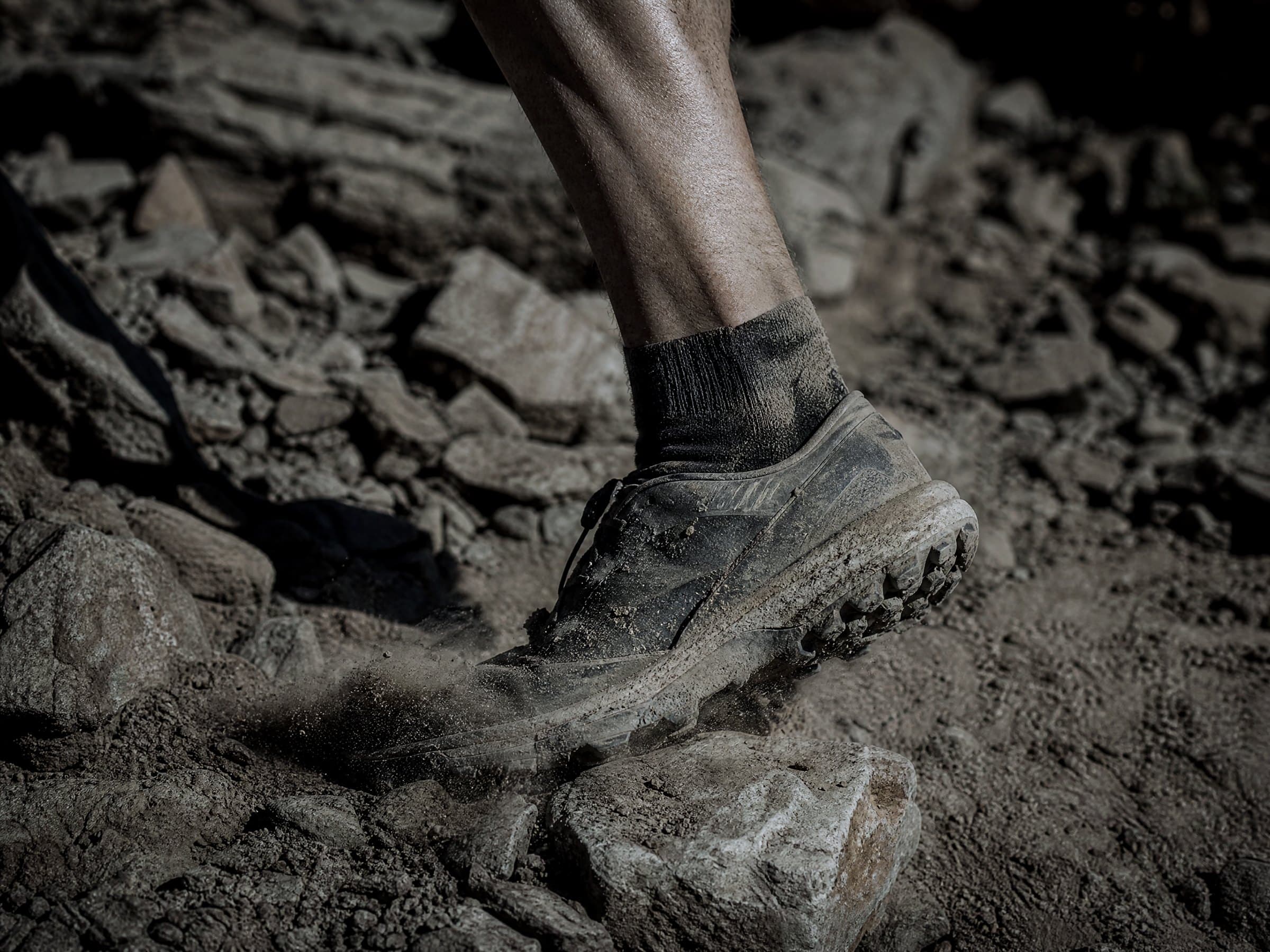
This is genuine fell terrain: rough, steep, rocky, with sustained climbs like Fusedale and slow technical descents where speed disappears. Climbs are hiked strongly; descents bill the quads all night. So the preparation is fell-specific, ideally on the route or on ground like it: strong hiking on steep ground, technical descending trained early, and the strength work that lets the legs keep absorbing landings deep into the second half. Road and canal miles build fitness but they don't build the skill the Lakeland tests.
A hundred miles is a fuelling problem
Between the fourteen checkpoints you carry your own fuel, and 40 hours of moving is far more than you can carry as glycogen. The runners who fade at Dalemain or Mardale Head are often the ones who stopped eating, not the ones who ran out of fitness. So a fuelling target you can absorb on rough ground, rehearsed on long fell days, with food you'll still want at hour 20. Gut training is legs training here as much as anywhere.
Where durability shows up
The Lakeland is a durability race with a navigation exam attached. What I watch through a build is late-run fell descending against the same ground fresh, how much the climbs cost once the legs are tired, and whether control and fuelling hold across a long night. On rough fell ground the watch numbers are approximate, so the durability reads come off the more comparable sections and the technical work is logged evidence. The pattern I'm after is the familiar one: engine intact, legs no longer delivering late. The data narrows it; I decide whether to load descents, hold volume or build recovery.
The build
A base of capped easy volume and two strength sessions, then a fell-specific block: long days on the route or ground like it, night navigation, technical descents progressed, and a fuelling plan drilled on rough terrain. Back-to-back fell weekends to teach the legs to work tired. A taper that arrives with fresh legs, because 6,300 m over 40 hours punishes fatigue you carried in.
What I watch
- Late-run fell descending against the same descents run fresh.
- Navigation accuracy at night and when tired.
- How much the climbs cost once the legs are into the second half.
- Fuelling on long fell days: grams per hour logged, gut score out of ten.
- Feet and control through a long night section.
- Recovery after the biggest fell weekends, where masters legs get caught.
Facts checked September 2026 against the race's published information: 105 miles, 6,300 m of ascent, a 40-hour limit, an unmarked course with one drop bag at Dalemain, entry by ballot with a qualifier. The 2026 edition finished around 63%; historically 40 to 50% do not finish. The official domain is lakeland100.com. Evidence level: the physiology matches the field notes; the navigation and fell-craft demands are the race's.
In the Lakeland ballot?
Tell me your fell experience and how your navigation holds up tired.