Race training · Multi-day and extreme duration
Spartathlon training: 246 kilometres from Athens to Sparta in 36 hours
Darren Ware, ULTRALABS coach · updated · 8 minute read
- Distance
- 244.7 km, Athens to Sparta
- Surface
- Tarmac and dirt road, one mountain footpath
- High point
- Sangas pass, 1,100 m, around km 160, at night
- Time limit
- 36 hours · 07:00 Saturday start
- Checkpoints
- 75, every one a cut-off
- First cut-off
- 42.2 km by 11:45 · 79.8 km by 16:30
- Finish rate
- About 70% (2025)
- Next edition
- 26 to 27 September 2026
- Entry
- 400 places · performance standard · €1,250 international
Spartathlon follows Pheidippides from the Acropolis to the statue of Leonidas: 244.7 kilometres of road, starting at seven on a Saturday morning in late September, with 36 hours to get there. Seventy-five checkpoints, and every one of them closes on the clock. The 42.2 km point closes at 11:45, four and three quarter hours after the start. The 79.8 km point closes at 16:30. Around km 160, in the middle of the night, the road stops and a stony mountain path climbs to the Sangas pass at 1,100 metres. About seven in ten of the 400 starters reach Sparta.
It is the race in the library where the first half is the hardest part of the plan. Nobody jogs the first 80 km of Spartathlon.
A marathon before lunch, in the heat
To be at Corinth inside the cut-off you need something close to a 4:15 marathon in the first 42 km and the same pace to 80 km, on open roads with little shade, in what the organisers call unrelenting heat. Then the pace can fall to a shuffle, but only then. For a runner over 40 the qualifying standards already say what fitness is needed; the plan is about spending it correctly. Heat preparation in the three weeks before, from the heat note, is what lets the first 80 km cost what it should rather than twice that. Fluid is to thirst and sodium by sweat, rehearsed, because both over-drinking and under-drinking end races here.
- 07:00, Acropolis
Start. Heat building by ten.
- 42.2 km, Megara, 11:45
A marathon in 4:45, cut-off. Most runners need to be well inside it.
- 79.8 km, Isthmia, 16:30
The Corinth canal. Nine and a half hours for 80 km, in the afternoon heat.
- 122.7 km, Nemea, 23:00
Dark. The pace can fall now; the eating cannot.
- 159.4 to 161 km, the mountain, 05:10 to 05:50
Sangas pass at 1,100 m, on a stony path, at the coldest hour of the second night.
- 244.7 km, Sparta, 19:00 Sunday
36 hours. The statue of Leonidas.
The mountain at midnight
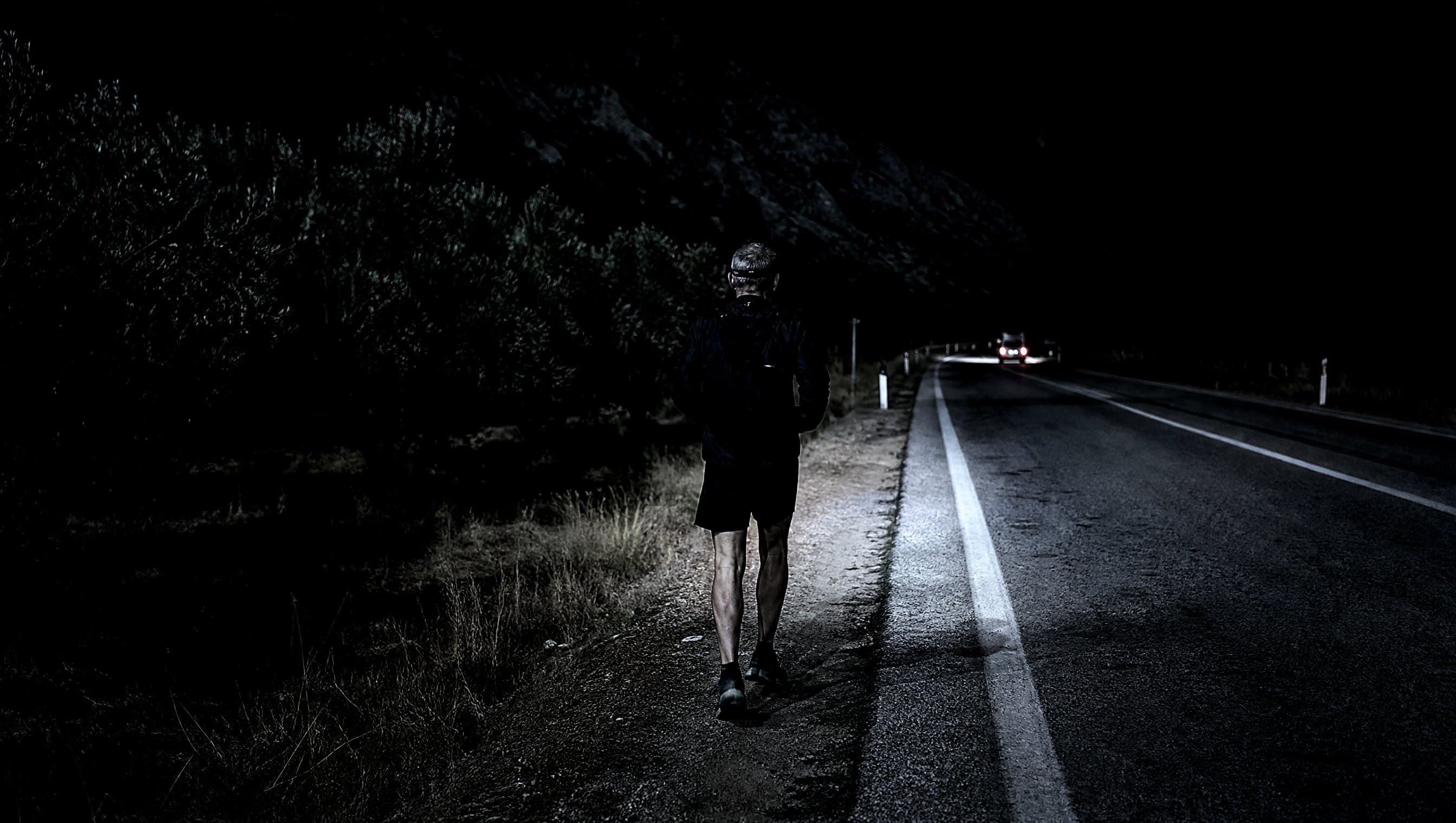
After 160 kilometres of road you climb 960 metres in 13 kilometres to the pass, on a footpath of loose stone, in the dark, at the low point of your second night awake. It is not technical by mountain-race standards and it does not need to be: on those legs, at that hour, a rocky path is enough. The preparation is steep walking practised tired, from the walking note, and a night block from the night note, with the caffeine planned for before the mountain, not on it. Poles are not allowed. Crews wait at Nestani on the far side.
Two hundred and forty kilometres of tarmac
Road durability is repetition: the same tendons, the same footstrike, for 30 hours. High weekly road volume, back-to-back long road runs and calf capacity from the strength work are what let the shuffle continue after the running has stopped. Aid arrives every three and a half kilometres, and the food is bread, fruit, cola and soup, so the gut is trained on small frequent intake of exactly that. The carbs note is the starting point.
Where durability shows up
On the road the watch data is clean, and Spartathlon builds show me the thing I most want to see: pace at the same heart rate over the third and fourth hour of long runs, in heat, against the first. What I read through the summer is the heat block taking, the second half of long runs holding, and whether fuelling survives a hot afternoon. Then I decide whether the next block is more heat, more road volume, or rest.
The build
Places are confirmed in the spring for a late-September race. A base of capped easy road volume and two strength sessions; a summer of long road runs with the first half at cut-off pace and the second half at survival pace, back-to-back weekends, an overnight rehearsal with a hill in it; then a three-week heat block into a two-week taper. Sleep banking in the last fortnight.
What I watch
- Pace at the same heart rate in hours three and four of long runs, in heat, against hour one.
- Easy-pace heart rate through the heat block, and the drop that says it has taken.
- Fluid and sodium per hour on hot long runs, and weight change across them.
- Small frequent fuelling from aid-station food, and the gut score.
- Steep walking speed when tired, at night, in rehearsal.
- Recovery after back-to-back road weekends, where masters legs get caught.
Facts checked September 2026 against spartathlon.gr, the 2026 road book and terms of participation: 244.7 km, 75 checkpoints with the closing times above, a 36-hour limit, the Sangas pass at 1,100 m climbed at night, poles and music banned, mandatory lights and reflectors, 400 places with performance standards and an international fee of €1,250, and 246 finishers with a last finisher at 35:57:40 in 2025. The 2025 finish rate of about 70% comes from results listings rather than the organiser. Evidence level: the heat, road and sleep physiology matches the field notes; the cut-off structure is the race's own.
Qualified for Spartathlon?
Tell me your qualifying run and how you cope with heat on the road.