Race training · 100 miles and long trail
Western States 100 training: heat in the canyons, then a river, then the night
Darren Ware, ULTRALABS coach · updated · 8 minute read
- Distance
- 100.2 miles / 161 km, point to point
- Ascent · descent
- 18,090 ft / 5,510 m up · 22,970 ft / 7,000 m down
- High point
- Emigrant Pass, 8,750 ft / 2,670 m, at mile 4.5
- Time limit
- 30 hours · 05:00 Saturday start
- Heat
- Canyons regularly 38 to 43°C
- River
- American River ford, mile 78
- Finish rate
- 76 to 87% (2023 to 2026)
- Next edition
- 26 to 27 June 2027
- Entry
- Lottery, 369 places · 100 km or 100 mile qualifier
Western States runs 100.2 miles from Olympic Valley to the track in Auburn, California, on the last weekend of June. The first four and a half miles climb 2,550 feet to Emigrant Pass. After that the course drops far more than it climbs: 22,970 feet of descent against 15,540 feet of further ascent, through three canyons whose floors sit above 40°C by early afternoon. At mile 78 you wade the American River. Then you run the night. Around eight in ten starters finish inside 30 hours, and the last finisher in 2026 came home with 89 seconds to spare.
It is the oldest hundred and the one every trail runner over 40 seems to want. It is also, for a British runner, the one most likely to be lost to heat rather than fitness.
The canyons decide it
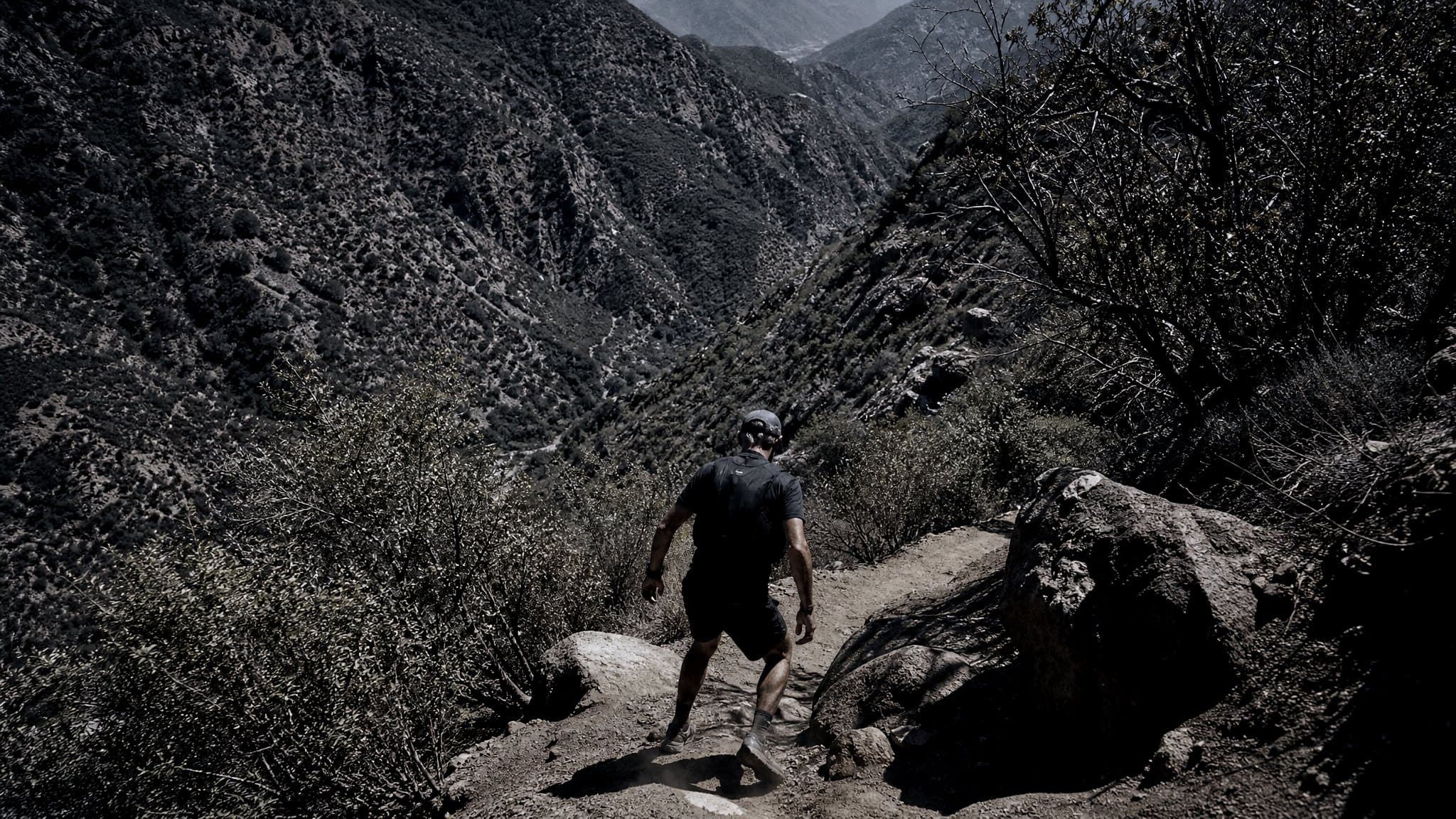
Between Last Chance and Michigan Bluff sit the miles the organisers call the most rugged on the course. Deadwood Canyon drops around 2,000 feet and climbs 1,500 feet to Devil's Thumb on a grade the race describes as extremely steep. El Dorado Canyon drops 2,600 feet and climbs 1,800 feet to Michigan Bluff. Both arrive between one and six in the afternoon, when the rock radiates heat back at you. The organisers have recorded 114°F off the canyon walls. Runners who trained in a British spring meet the canyons with a body that has never sweated properly, and their afternoon disappears.
- Mile 4.5, Emigrant Pass
2,550 ft up in the first hour, at 8,750 ft. Cold at 05:00, then never cold again until the second night.
- Mile 30, Robinson Flat
Cut-off 14:10. First crew point for most. The heat has arrived.
- Miles 43 to 56, the canyons
Deadwood, El Dorado, Volcano. Two thousand feet down, fifteen hundred up, repeated, in the hottest hours. Devil's Thumb cut-off 19:10.
- Mile 62, Foresthill
Cut-off 23:45. Pacers join. Half the course is still to run, most of it in the dark.
- Mile 78, Rucky Chucky
The river ford, 05:00 cut-off. Wet feet for the last 22 miles.
- Mile 100.2, Auburn track
11:00 Sunday. Under 24 hours earns the silver buckle.
A descent race wearing a heat race
Twenty-three thousand feet of descent is the number I put in front of every Western States athlete. The canyons are steep, the trail is dusty and loose, and the quads take the bill by mile 60. Late in the race the organisers list rhabdomyolysis among the medical risks for a reason. The protection is the same as for any mountain hundred: heavy strength work through the winter, then long steep descents in the spring so the legs have met the damage before race day. The descents note covers how I progress it.
Heat, for a runner who lives in the rain
The organisers advise at least ten days of heat acclimation. I want two to three weeks, finishing a few days before the flight: hot baths or sauna after easy runs, overdressed runs, and at least one long run in whatever heat the British summer offers. The physiology is plasma volume, earlier sweating and a lower heart rate for the same pace in the heat, and it fades within a fortnight, so the timing matters as much as the dose. The heat note has the protocol. Cooling on the course is crew work: ice in the hat, ice in the bandana, sponges at every station, and drinking to thirst rather than to a schedule, because hyponatraemia is on the organisers' list too.
Night, river, poison oak
For a mid-pack runner the dark starts before Foresthill and lasts until the river. The course requires two lights and I want them tested on a long night run, not opened at mile 62. The river ford at mile 78 leaves feet wet for the last 22 miles, so the foot-care rehearsal includes wet feet on tired legs. The organisers also warn about poison oak in the last 30 miles, rattlesnakes, and the mountain lions nobody sees. A pacer from Foresthill is allowed and, for a first-timer, wise.
Where durability shows up
Western States is decided between mile 55 and mile 85, on quads that have paid for three canyons and a body that has spent six hours above 38°C. What I read through a build is late-run descending against the same ground fresh, heart rate at easy pace in heat sessions week on week as acclimation takes, and whether fuelling holds across a hot long run. The pattern I am looking for is the usual one: aerobic engine intact, legs and gut no longer keeping up. Then I decide whether the next block is more descents, more heat, or more rest.
The build
The lottery is drawn in early December, so a Western States build is a winter of capped easy volume and two strength sessions, a spring of long descents and back-to-back weekends, a fuelling plan drilled on hot long runs, and a heat block that ends days before departure. Altitude is modest, 6,200 to 8,750 feet in the first hour, and needs no special preparation for most. A taper that arrives with fresh quads, because the canyons punish fatigue carried in.
What I watch
- Late-run descending on steep loose ground against the same descents run fresh.
- Easy-pace heart rate in heat sessions as the acclimation block progresses.
- Fluid and sodium per hour on hot long runs, and weight change across them.
- Fuelling on long descents, where the gut is jolted and the appetite goes.
- Night running with the race lights, feet wet, in rehearsal.
- Recovery after the biggest descent weekends, where masters legs get caught.
Facts checked September 2026 against wser.org: 100.2 miles, 2,550 ft to Emigrant Pass then 15,540 ft further ascent and 22,970 ft of descent, 30-hour limit with the intermediate cut-offs above, pacers from Foresthill, canyon temperatures above 110°F, the American River ford at mile 78, finish rates of 86.5%, 76.3%, 77.2% and 87% for 2023 to 2026, a 369-place lottery with 11,328 applicants for 2026 and a 100 km or 100 mile qualifier. The 2027 edition is 26 to 27 June. Evidence level: the heat and descent physiology matches the field notes; the course demands are the race's own.
Got a Western States ticket?
Tell me your qualifier, how you cope in heat and what your quads do on long descents.