Race training · Mountain and technical
Ultra-Trail Cape Town training: Table Mountain, Platteklip and 5,000 metres in 100 km
Darren Ware, ULTRALABS coach · updated · 7 minute read
- UT100
- 99.1 km · about 5,000 m ascent · 26 h · 04:00 Saturday
- 100 mile
- 163 km · about 7,200 m ascent · 45 h · 17:00 Friday
- Steepest climb
- Platteklip Gorge, 876 m in 4.8 km
- Front-loaded
- UT100: 4,972 m in the first 50 km
- Weather
- Single digits on the summit, 30°C plus below
- Pacers
- 100 mile only, Llandudno to Alphen
- Next edition
- 20 to 22 November 2026
- Entry
- No ballot · 100 mile needs a 50 km trail race · R5,495 / R6,495
- 2025
- 100 mile shortened for 90 km/h winds
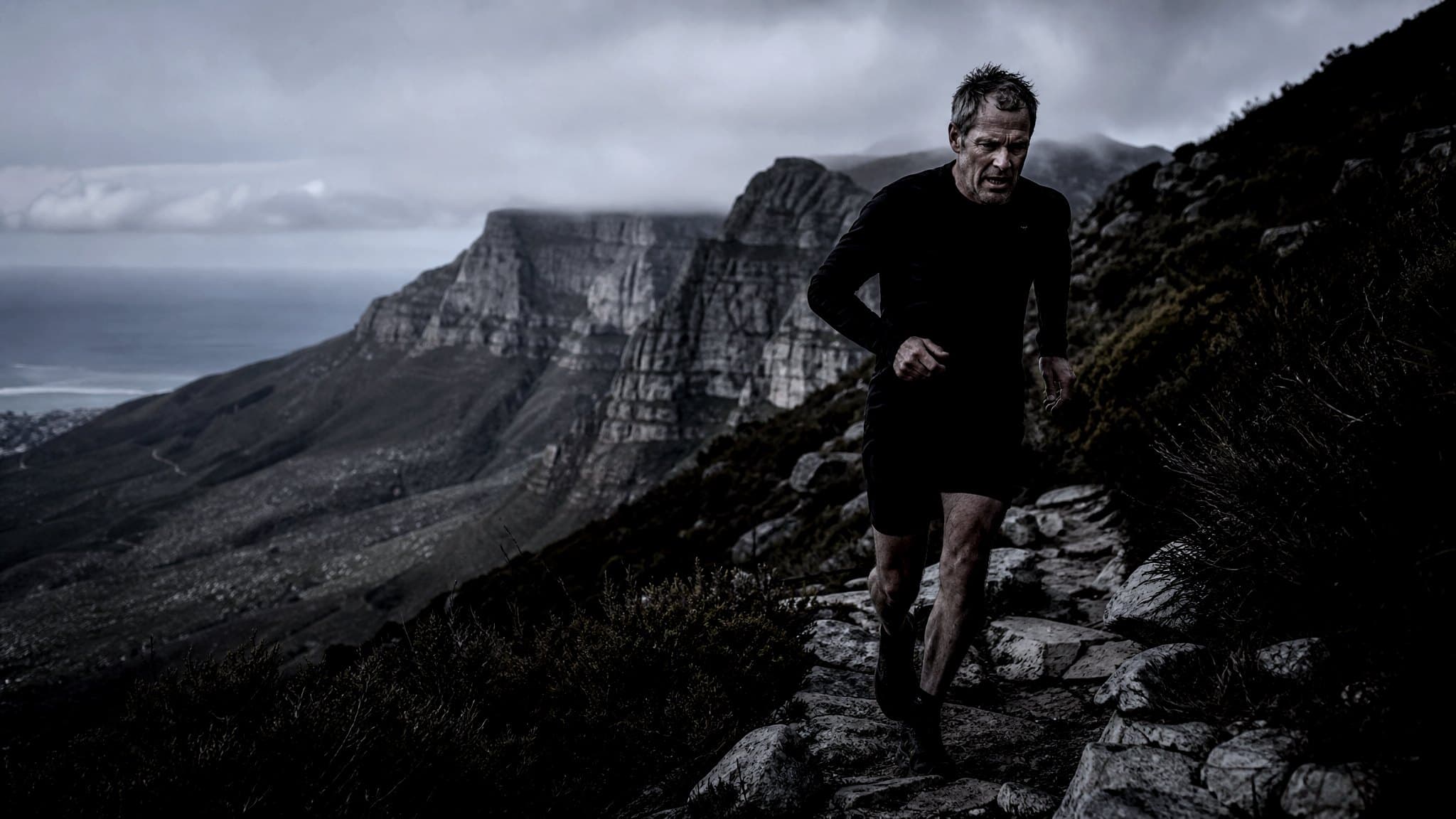
Ultra-Trail Cape Town runs on Table Mountain and the peninsula from Gardens Rugby Club: a 100 km with about 5,000 metres of climbing and a 26-hour limit, starting at four on a Saturday morning in late November, and a 100-mile with about 7,200 metres and 45 hours, starting at five on the Friday evening. The 100 km puts almost all of its climbing in the first 50 kilometres, including Platteklip Gorge, 876 metres in 4.8 kilometres. The organisers describe the terrain as technical with steep ascents and descents, the summit in single digits on a morning when the coast is past 30°C, and weather that changes drastically. In 2025 gale-force winds shortened the 100-mile.
Fifty metres of climbing per kilometre is UTMB density on a course that looks, from the city, like a day out. It is the race in the library most likely to surprise a fit road runner.
Stairs, then more stairs
Platteklip is a stone staircase up the front of Table Mountain and the rest of the course is not much gentler: Signal Hill, Kloof Nek, Llandudno, Suther Peak, Constantia Glen, then Nursery Ravine to finish. The climbing is walked, steeply, with the hands on the knees, and the walking note is the training: uphill economy on 25 to 30 per cent grades, stair repeats where the hills are short, and the calf capacity from the strength work that stairs demand. The 100 km is front-loaded on purpose; a runner who climbs 5,000 metres in the first eight hours has to descend the rest on legs already paid for.
- UT100: 04:00 Saturday
One hour of dark, then Platteklip and the mountain by nine.
- UT100: Hout Bay, 57 km, 18:30
The climbing mostly done, 4,972 m of it. Then the long runnable half into the night for the mid-pack.
- UT100: finish, 06:00 Sunday
26 hours.
- 100 mile: 17:00 Friday
Straight into the first night on the mountain. Llandudno cut-off 04:00.
- 100 mile: Simon's Town, 90 km, 18:30 Saturday
The peninsula, in the heat of the day, then the second night to Alphen.
- 100 mile: finish, 14:00 Sunday
45 hours.
Rock, descents, wind
The descents are rocky, steep and technical, and the quads and the ankles pay for them together. The descents note is the winter and spring work, on ground as rough as can be found; foot placement is a skill and it is trained on rock, not on tarmac. The 2025 wind, up to 90 km/h on the ridges, is a reminder that the mandatory kit, from the waterproof to the sunscreen, is on the list for a reason.
Heat and cold in one day
Late November is early summer: a chilly summit at dawn, a hot exposed afternoon on the peninsula, and for the 100-mile a second night. The heat note covers the block for a British runner arriving from autumn, and the layering is rehearsed for the reverse: warm kit on at the top, off by Kloof Nek. Aid is 14 to 20 kilometres apart with no mobile crew allowed, so the pack carries a litre and a half and the compulsory kit up every climb, which is the loaded walking again.
Two nights, for the miler
The 100-mile starts at five on Friday evening and a 35 to 40 hour finisher sees two full nights. Pacers are allowed from Llandudno to Alphen, up to three, one at a time. The night note is the block, with the first-night start rehearsed, because starting a race at dusk on a mountain is its own skill.
Where durability shows up
Steep rocky ground makes the watch approximate, so the durability reads through a UTCT build come off the comparable sections and the long climbs: uphill speed at the easy cap over the months, and descending on the second half of a long day against the same descent fresh. The pattern I want is a runner whose legs still descend Nursery Ravine at hour twenty. Then I decide what the next block holds.
The build
No ballot, so the build can start when the entry does. A base of capped easy volume and two strength sessions with the calves and single-leg work emphasised; a block of long steep days with stair repeats, back-to-back weekends, descents progressed on rock, the pack at race weight; a heat block for the November arrival; a two-week taper, and for the miler, the sleep banked.
What I watch
- Uphill speed at the easy cap on the steepest ground available, loaded, over the build.
- Descending on rock in the second half of long days against the same descent fresh.
- Calf and ankle soreness after stair and rock sessions, and how it changes across the build.
- Easy-pace heart rate through the heat block.
- Kit discipline on long days in changeable weather, from the check-in.
Facts checked September 2026 against ultratrailcapetown.com, its race information, pacer and entry pages and the 2025 timing schedules: 99.1 km with about 5,000 m and 163 km with about 7,200 m of ascent (the organiser's pages give slightly different totals for both), the 26 and 45-hour limits with the cut-offs above, 4,972 m of climbing in the first 50 km of the 100 km, no mobile crew support, the mandatory kit and penalties, pacers on the 100 mile only, fees of R5,495 and R6,495, a 50 km trail qualifier for the 100 mile, the 20 to 22 November 2026 dates, and the 2025 shortening for wind. Official finish rates were not published when this was checked. Evidence level: the climbing, descending and heat physiology matches the field notes; the demands are the race's own.
Heading to Cape Town in November?
Tell me which distance, and how your legs handle a steep, rocky descent.