Race training · Mountain and technical
Hardrock 100 training: thirteen passes above 12,000 feet, storms in the afternoon
Darren Ware, ULTRALABS coach · updated · 8 minute read
- Distance
- 102.5 miles / 165 km (counter-clockwise, 2027)
- Ascent · descent
- 33,441 ft / 10,190 m each way
- Average altitude
- About 11,000 ft / 3,350 m
- High point
- Handies Peak, 14,048 ft / 4,282 m
- Passes above 12,000 ft
- Thirteen
- Time limit
- 48 hours · 06:00 Sunday
- Finish rate
- About 79% (2026)
- Next edition
- 9 to 11 July 2027
- Entry
- Lottery, 147 places · qualifier · 8 h trail work · $450
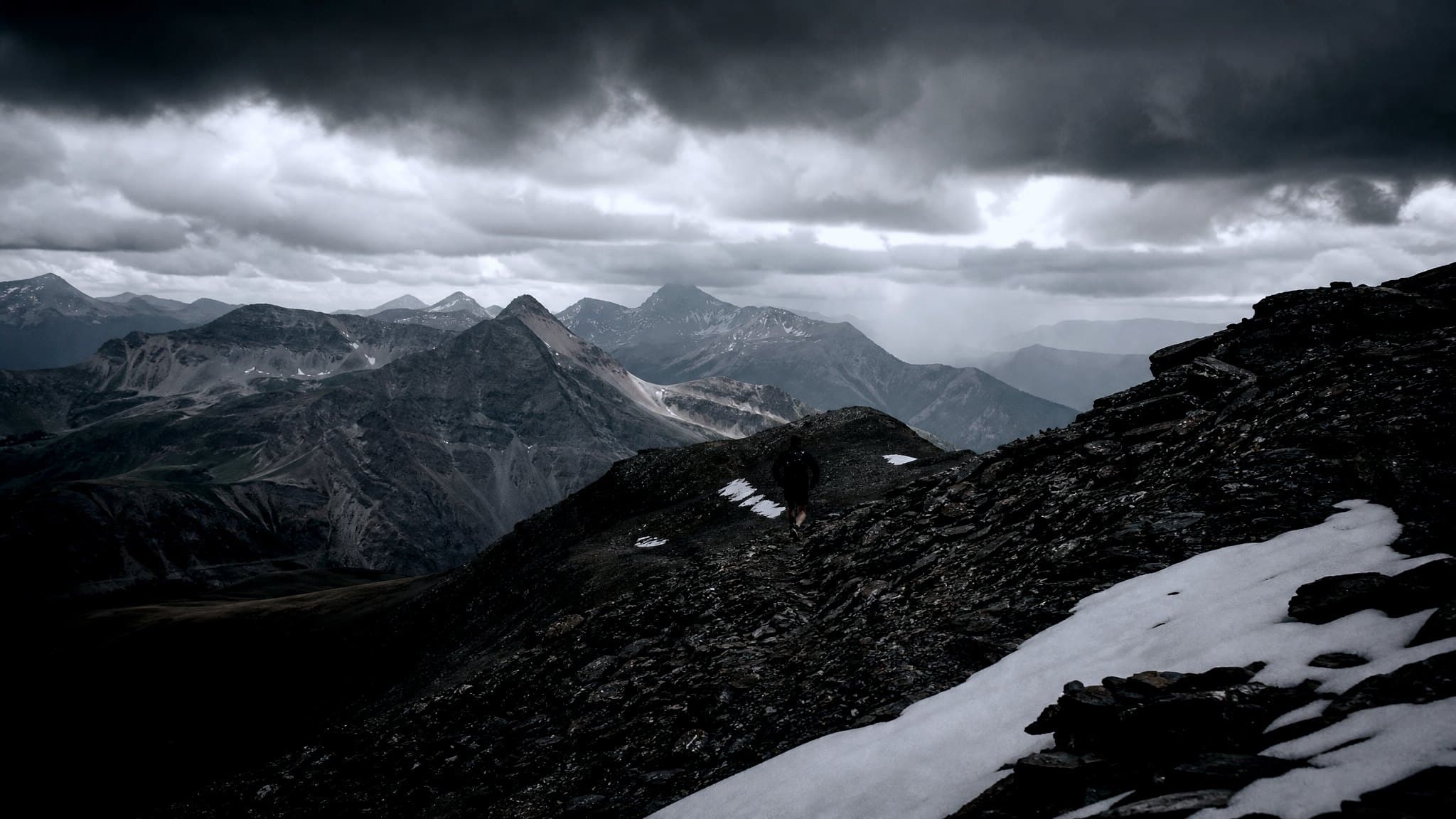
Hardrock is a hundred-mile loop of the San Juan Mountains from Silverton, Colorado, run clockwise one year and counter-clockwise the next. In 2027 it runs counter-clockwise. The average altitude is about 11,000 feet. There are thirteen passes above 12,000 feet and the high point is the summit of Handies Peak at 14,048. You climb 33,441 feet and descend the same. Aid stations are up to eleven miles apart, which the organisers translate as six hours or more between them. The limit is 48 hours. You finish by kissing a rock.
It is the hardest hundred in the library to get into and the one where fitness matters least relative to everything else: altitude, mountain craft, weather and kit.
Altitude first
A runner arriving from sea level has less oxygen for every step for two days. Perceived effort rises, easy pace slows, appetite goes, and the risk of altitude sickness is real on a course that spends most of its time above the height where it begins. The organisers say it plainly. So does every Hardrock finisher: get there early. Two weeks at altitude before the race is the minimum I would ask of a British athlete, and the plan builds it in as a cost of the race rather than a luxury. Sleeping high and training easy for the first week, then a couple of hikes over the passes, then rest. Without that, the training below does not get its chance.
Thirteen passes, walked
Each pass is two to four and a half thousand feet of climbing from the valley, on jeep road, faint trail and cross-country. Grant Swamp Pass is a scree couloir. Virginius has three steep pitches, usually with snow and sometimes a fixed rope. Nobody runs these; the race is decided by how efficiently you walk uphill at altitude, hour after hour, and by how well you descend scree, talus and snow on tired legs. The walking note covers uphill economy and poles, which almost every finisher uses here. The descents note covers the legs. A British build finds the closest ground it can: the Lakes, Snowdonia and the Highlands for steep loose descending, and the Alps or Pyrenees for a fortnight of real altitude if the calendar allows.
- Silverton, 06:00 Friday
Start at 9,310 ft. The first passes come before the first storm.
- Sherman, 20:15 Friday
First night beginning. Handies Peak, 14,048 ft, sits in this stretch.
- Ouray, 09:00 Saturday
The low point, 7,680 ft, and the closest thing to a town. Most drops happen here.
- Telluride, 16:00 Saturday
Oscar's Pass and Virginius behind you. Afternoon storms most likely now.
- Silverton, 06:00 Sunday
48 hours. Kiss the rock.
Weather, lightning, kit
Mid-July in the San Juans means afternoon thunderstorms most days, and the organisers list direct lightning strikes among the race's history. Near-freezing rain and wind arrive together above 13,000 feet. The runner's manual allows two to four hours of the 48 for sheltering, and pacing to clear the high passes before the afternoon build is a race plan, not a hope. Kit discipline is the skill I drill hardest: a hard shell and rain trousers carried and put on early, dry gloves, 80 ounces of fluid capacity, food for six hours between stations. Feet will be wet nine tenths of the time. The manual says so.
Navigation and the second night
Course markers exist and marmots eat them; you are expected to know the route. A GPS tracker is mandatory. A mid-pack Hardrock has two nights in it, the second on the highest ground with the coldest weather and the least judgement left. The night note is the block I use, and the pacer allowed from Grouse Gulch onwards is, for a first-timer, part of the safety system rather than a luxury.
Where durability shows up
Watch data at 12,000 feet on scree is approximate, so the durability reads through a Hardrock build come off the comparable ground: long steep hikes at the easy cap, week on week, and technical descents against the same descent run fresh. Heart rate at easy effort during the altitude fortnight is the number that tells me acclimation is taking. What I am looking for is whether the legs still descend and the athlete still eats after twelve hours on the hill. Then I decide what the next block holds.
The build
The lottery is drawn in early December. A winter of capped easy volume, two strength sessions and as much steep ground as the weather allows; a spring of long mountain days with poles, loaded, with descents progressed on rock and scree; back-to-back weekends; eight hours of trail work, which the race requires; then the altitude fortnight, which is the taper. Heat is a lesser factor here than at Western States, but Ouray in the afternoon reaches the high twenties and the sun at altitude is fierce.
What I watch
- Uphill walking speed at the easy cap on steep ground, loaded, over the build.
- Late-run descending on scree and rock against the same ground fresh.
- Easy-effort heart rate during the altitude fortnight.
- Kit and fuelling discipline on long mountain days in bad weather, from the check-in.
- Recovery after the biggest mountain weekends, where masters legs get caught.
- Whether the athlete reports the niggles that steep descending brings, on the day they start.
Facts checked September 2026 against hardrock100.com and the 2026 runners' manual: 101.8 miles clockwise and 102.5 counter-clockwise, 33,441 ft of climb and descent, an average elevation of about 11,000 ft, thirteen passes above 12,000 ft, Handies Peak at 14,048 ft, a 48-hour limit, aid stations up to 10.6 miles apart counter-clockwise, pacers from Grouse Gulch in 2027, a mandatory GPS tracker, a lottery of 147 places drawn in December with a qualifier and eight hours of trail work, and a $450 fee. The 2025 counter-clockwise cut-offs are shown because the 2027 table was not yet published. The 2026 finish rate of 79% is from results listings rather than the organiser. Evidence level: the altitude, descending and cold-weather physiology matches the field notes; the mountain demands are the race's own.
Drawn for Hardrock?
Tell me your altitude history, your scree legs and how your kit discipline holds at 3 am.