Race training · 100 miles and long trail
West Highland Way Race training: 95 miles from Milngavie to Fort William, starting at one in the morning
Darren Ware, ULTRALABS coach · updated · 7 minute read
- Distance
- 95 miles / 153 km, Milngavie to Fort William
- Ascent · descent
- About 14,760 ft / 4,500 m each
- Start
- 01:00 Saturday · 35-hour limit
- Early cut-offs
- Balmaha 19 mi in 5 h · Beinglas 42 mi in 12 h
- Support
- Crew with a vehicle is a condition of entry
- Support runners
- From Tyndrum, only if you arrive after 11:00
- Finish rate
- About 84% (2026), about 75% historically
- Next edition
- 19 June 2027, the 41st
- Entry
- Ballot, 300 places · 90 miles of off-road ultras since 2024
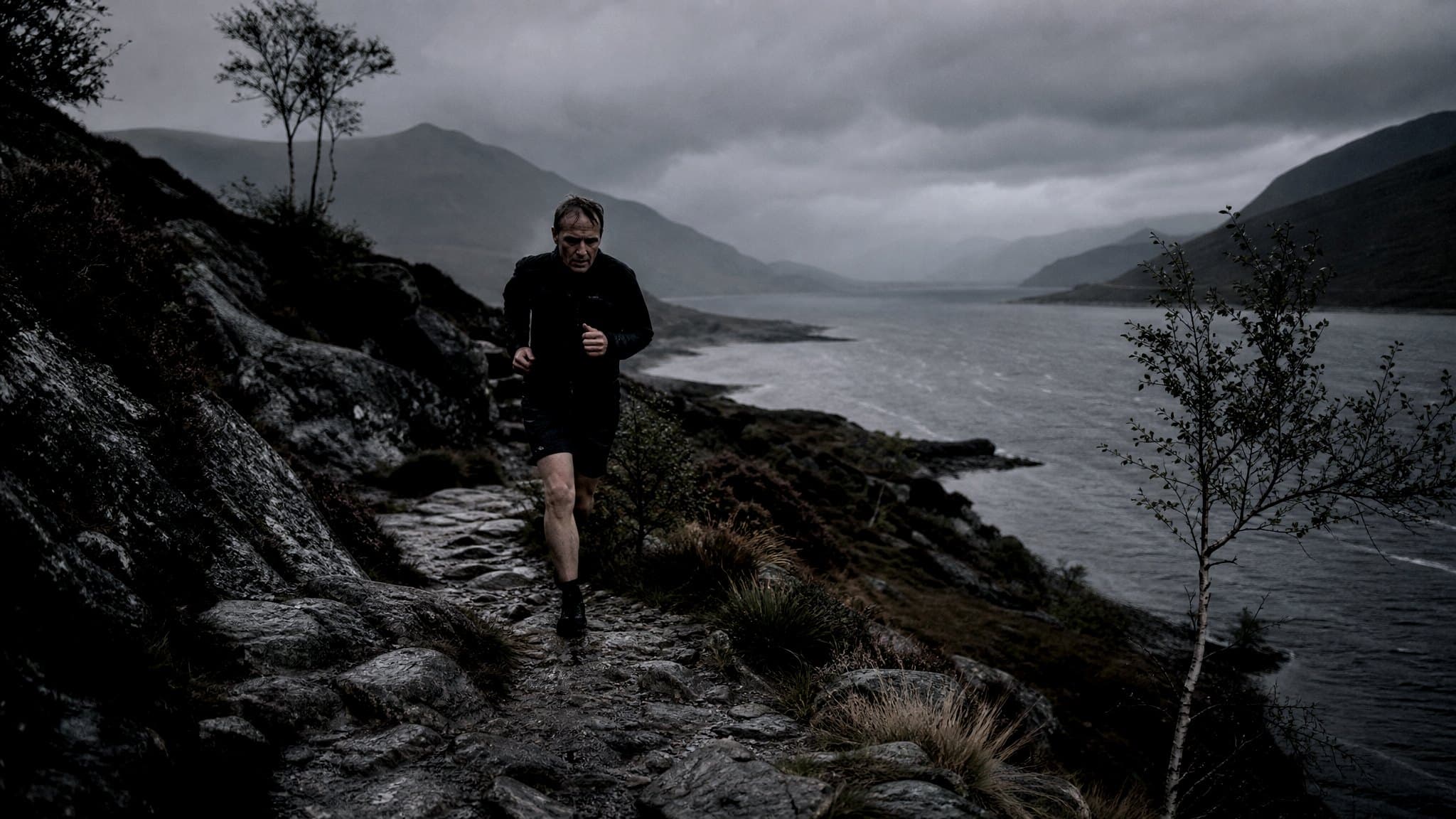
The West Highland Way Race starts at one in the morning at Milngavie station and follows the national trail 95 miles north to Fort William: Conic Hill, the rough east shore of Loch Lomond, Rannoch Moor, the Devil's Staircase and the Lairig Mòr. About 14,760 feet up and the same down, roughly eight miles of it on tarmac. You have 35 hours, and the first cut-offs are the hard ones: Balmaha, 19 miles, in five hours; Beinglas, 42 miles, in twelve. A crew with a car is a condition of entry. Around three quarters finish, and in 2026 more than four in five did.
It is the most Scottish race in the library: waymarked, crewed, midge-ridden, cold at night in June and run by people who come back year after year.
The one o'clock start
You start at the body's low point. Civil darkness in Glasgow in late June lasts from about eleven until half past three, so the dark itself is short, but the sleep loss is not: a mid-pack runner is awake from Friday breakfast to Sunday morning and picks up a second night from Saturday evening. The night note is the block for it, with one change: the rehearsal run starts at 01:00, because Balmaha to Rowardennan at four in the morning on the Lomond shore is where the circadian low meets the most technical ground on the course.
Fourteen thousand feet down
The race's own medical guidance names rhabdomyolysis as a specific risk because of the downhill load, and asks runners not to take ibuprofen or its cousins. The descents off Conic Hill, the Devil's Staircase and the long drop into Fort William are where the quads pay. The descents note is the preparation, and the strength work through the winter is what gives the muscle capacity to spare.
Cold, wet, midges, crew
The organisers warn of cool temperatures overnight and say hypothermia has been encountered on several occasions; heat illness is the rarer problem. Kit is a taped-seam waterproof, a torch and spares, a foil blanket and food, with bad-weather kit on call. Midges own Rowardennan in June. The crew feeds you at checkpoints seven to twelve miles apart, so the food is theirs, and the plan rehearses eating solid crew food on long runs rather than gels. Fluid is to thirst, in the organisers' words as much as mine; the hydration note covers why.
Where durability shows up
Lomondside is rough enough to make the watch data approximate, but Rannoch Moor and the Lairig Mòr are runnable, and the durability reads come off those: late-run pace at the same heart rate against the first hours, and how the descents cost once the legs are tired. Through a build I watch descending against the same descents run fresh, and whether the athlete can hold four miles an hour on technical ground without stopping. Then I decide what the next block holds.
The build
The ballot is in October for June. A winter of capped easy volume and two strength sessions; a spring of long days on the Way itself where possible, the Lomond shore run tired, descents progressed, back-to-back weekends; a 01:00 rehearsal with the crew; then a two-week taper. Heat preparation is rarely needed; cold and wet rehearsal always is.
What I watch
- Pace on technical ground in the early hours of the rehearsal, against the same ground fresh.
- Late-run descending on long days against the same descents run fresh.
- Late-run pace at the same heart rate on the runnable sections.
- Solid-food fuelling from crew stops on long runs, and the gut score.
- Sleep in the fortnight before, and how the 01:00 rehearsal went.
Facts checked September 2026 against westhighlandwayrace.org, its rules, checkpoint and entry pages and the 2025 medical guidance: 95 miles, about 14,760 ft of ascent and descent, a 01:00 start and 35-hour limit with the cut-offs above, a crewed format with support runners only after Tyndrum and only for slower arrivals, the kit list, the no-NSAID and drink-to-thirst guidance, 300 ballot places with a 90-mile off-road qualifying history, and the 19 June 2027 date. Finish rates of about 75% historically and 84% in 2026 are from the organiser's history page and a published 2026 report. Darkness hours are computed from sunrise and sunset data, not the organiser's. Evidence level: the sleep, descent and cold physiology matches the field notes; the demands are the race's own.
In the West Highland Way ballot?
Tell me your off-road ultras and how you run on no sleep.