Race training · 100 miles and long trail
Thames Path 100 training: a hundred flat miles where there is nowhere to hide
Darren Ware, ULTRALABS coach · updated · 7 minute read
- Distance
- 100 miles / 161 km, Richmond to Oxford
- Ascent
- 1,900 ft / 560 m
- Surface
- About 75% trail, 25% paved; mud when wet
- Time limit
- 30 hours · 09:00 Saturday start
- Cut-offs
- At every aid station
- Pacers
- From Henley, mile 51
- Finish rate
- 67% (2026), 72% (2025)
- Next edition
- 1 May 2027
- Entry
- 300 places, first come · 50-mile qualifier under 15 h · £225
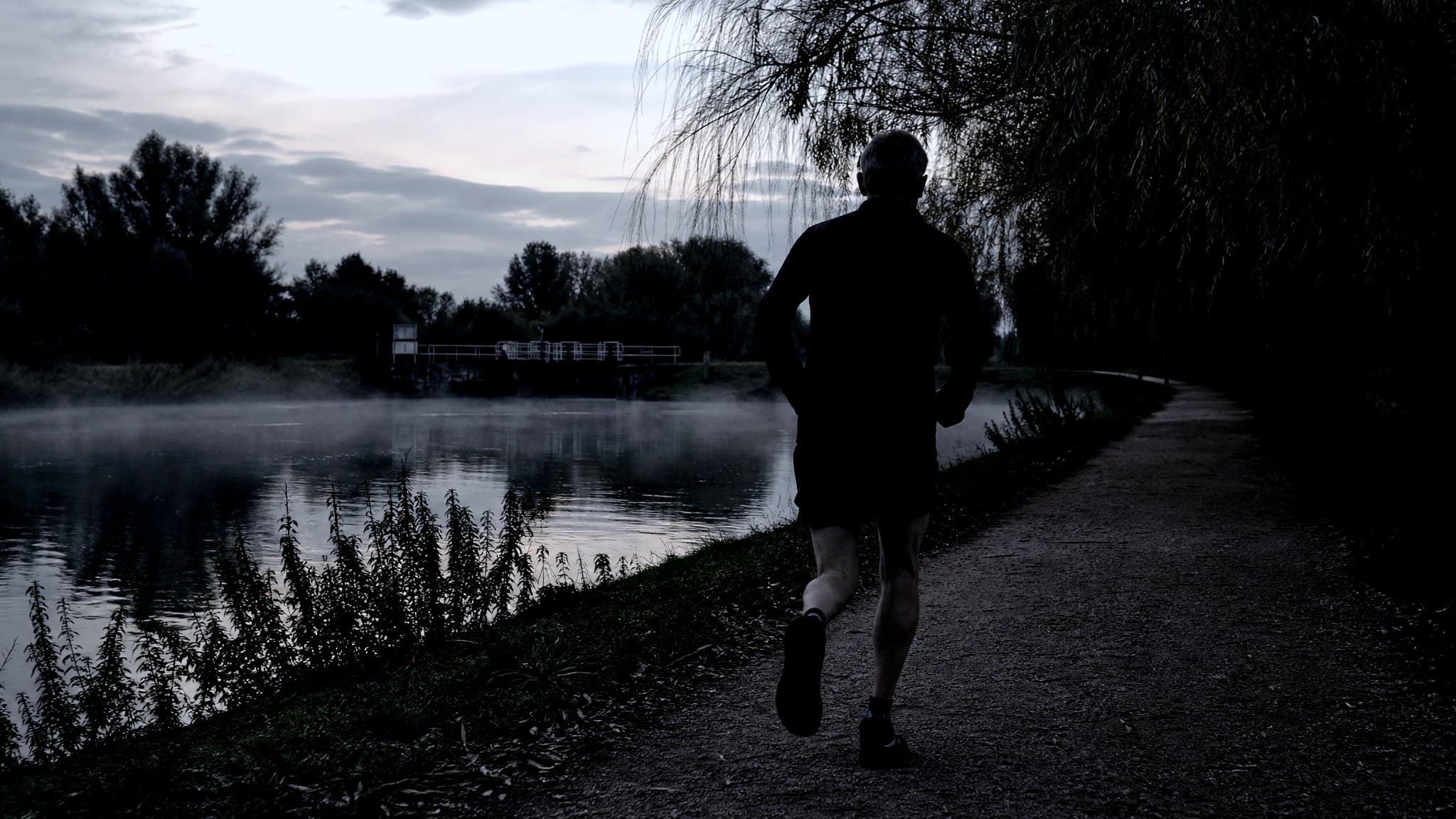
The Thames Path 100 runs from Richmond to Oxford on the river's towpath, a hundred miles with 1,900 feet of climbing, which for a hundred is none. It starts at nine on a Saturday morning in early May and gives you 30 hours, with a cut-off at every one of the twelve aid stations. Pacers join at Henley, mile 51, about where the dark begins. Two thirds to three quarters finish. It is the race people enter because it is flat, and the race that teaches them what flat costs.
For a runner over 40 it is the purest durability test in the library. There is no hill to walk, no descent to blame. The stride that fades at hour six fades in full view.
Flat is not easy
On a mountain course the terrain changes your gait every few minutes and the muscles share the load. On the towpath every step is the same step, for 25 hours, and the same tissues take every one. Calves, Achilles and the small muscles of the foot are the first to go, and the quarter of the course on tarmac makes it worse. So the preparation is long continuous running: back-to-back weekends, four and five hour runs on flat firm ground, calf and foot strength through the winter, and the long-run progression held inside the 30-day guardrail from the progression note, because a flat course tempts people into big jumps.
- Henley, 51 mi, 00:20
Pacers join. Hot food. The dark has started.
- Reading, 58 mi, 02:45
Urban, quiet, the low hours beginning.
- Goring, 71 mi, 06:15
Hot food and a drop bag. Dawn about now for the mid-pack.
- Clifton Hampden, 85 mi, 10:30
The out-and-back to the hall. The last cut-off that catches people.
- Oxford, 100 mi, 15:00 Sunday
30 hours.
The night on the river
Miles 60 to 85 are where the organisers' cut-offs bite and where the drops cluster: the dark, the cold by the water, the flat monotony and a gut that has stopped. The night note is the block, and the fuelling plan from the carbs note is written for a full night of eating on the move, because on a flat course the calories are the pace. May can bring a warm afternoon and a 6°C night in the same race, so the layers are in the drop bag at Henley and the rehearsal includes putting them on.
Mud, water, road crossings
In a wet spring the towpath is bog and the organisers say so; in 2025 diversions for bridge works made the course 103 miles. Shoe choice is decided on the week's forecast, and the plan includes runs in mud so the first time is not race day. Road crossings are unmarshalled; navigation is yours, with acorn waymarks, pink ribbons and a GPX. None of it is hard. All of it is harder at 3 am.
Where durability shows up
The Thames Path gives the cleanest data of any hundred: flat, runnable, comparable from start to finish. What I read through a build is the second half of long runs against the first at the same heart rate, week on week, and the day-after cost of the long flat runs on the calves and feet. The pattern I want by April is a runner whose fourth hour looks like their first. Then I decide what the next block holds.
The build
Entries open in the autumn for May. A winter of capped easy volume with two strength sessions heavy on calves and feet; a spring of long flat runs and back-to-back weekends, a night rehearsal on the towpath itself, fuelling drilled for a full night; a two-week taper. Heat preparation only if the forecast asks for it.
What I watch
- Pace at the same heart rate in the second half of long runs against the first.
- Calf, Achilles and foot soreness in the days after long flat runs, and how it changes across the build.
- The long-run jump against the longest run of the last 30 days, every week.
- Carbohydrate per hour through the night rehearsal, and the gut score.
- How the athlete copes with monotony: whether the effort drifts up when the ground stops changing.
Facts checked September 2026 against centurionrunning.com and the 2026 info pack, rules and crew instructions: 100 miles, 1,900 ft of gain, about 25% paved, a 09:00 start and 30-hour limit with cut-offs at every aid station including those above, pacers from Henley, crew at eight points only, the mandatory kit and the one-hour penalty per missing item, 300 first-come places with a 50-mile qualifier under 15 hours and a £225 fee, and finish rates of 67% in 2026 and 72% in 2025 from the organiser's race reports. The 2027 date is 1 May. Darkness hours are computed from sunrise and sunset data. Evidence level: the durability and fuelling physiology matches the field notes; the demands are the race's own.
Entered the Thames Path 100?
Tell me your fifty and what happens to your stride after six hours on the flat.