Race training · Road and runnable
Comrades Marathon training: 90 road kilometres with the clock running against you
Darren Ware, ULTRALABS coach · updated · 7 minute read
- Distance
- About 90 km, Pietermaritzburg to Durban (2027 Down Run)
- Surface
- Tarmac, roads closed
- The Big Five
- Cowies, Fields, Botha's, Inchanga, Polly Shortts
- High point
- About 870 m near Umlaas Road
- Time limit
- 12 hours from your start gun
- Cut-offs
- At every stage, rescue bus if missed
- Finish rate
- 89.8% (2026), 86.9% (2025)
- Next edition
- 13 June 2027, the 100th, 05:00 start
- Entry
- Ballot, 28,000 cap · marathon under 5:00 · R4,500 international
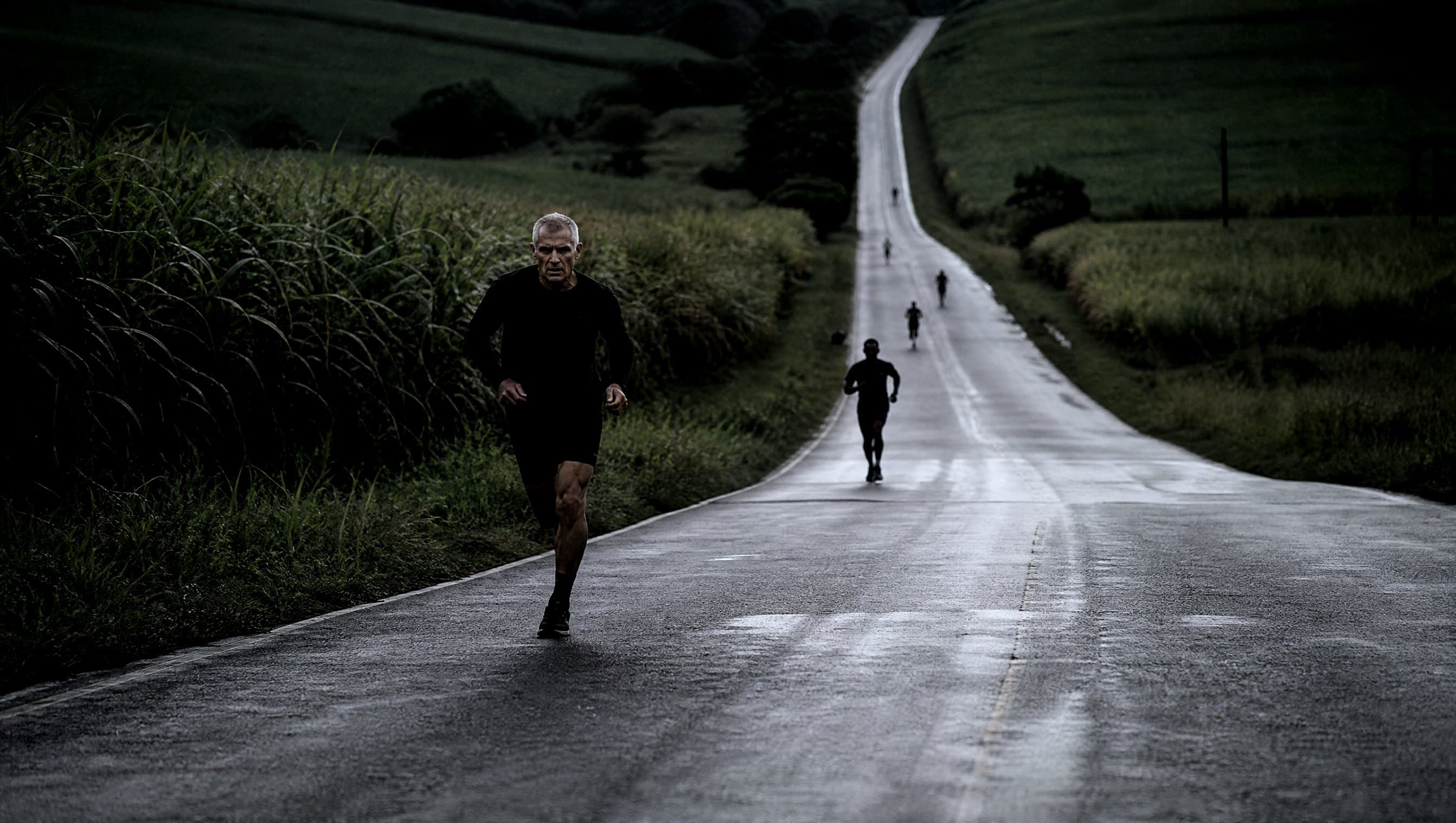
Comrades is the oldest ultra in the world and the biggest: about 90 kilometres of closed tarmac between Pietermaritzburg and Durban, run in alternate directions. The 2027 race, the hundredth, is a Down Run: 655 metres of altitude to lose, most of it in the second half, with the Big Five hills in the way. You have twelve hours from your gun, enforced to the second, and a cut-off at every stage with a bus waiting for anyone who misses one. Nine in ten starters finish. The one in ten is usually a pacing story.
For a runner over 40 who has raced marathons, Comrades is the most reachable ultra in the library and the most unforgiving of a fast first hour.
A Down Run is a quad exam
Down means net descent, on tar, at a pace that stays close to running the whole way. Every downhill step is eccentric loading on the quads, and there are tens of thousands of them. The runner who has done their long runs on rolling trail arrives with legs that have never met sustained road descent and finds out on Fields Hill at 60 km. The protection is the repeated-bout effect: long downhill road runs through the build, progressed carefully, and heavy strength work through the winter so the muscle arrives with capacity to spare. The descents note covers how I progress it, and it applies to tarmac as much as mountains.
Twelve hours, by the clock
The cut-offs run on time of day and the organisers say plainly that they are operational requirements, not pacing targets. In 2026 the halfway cut at Drummond was 12:10 for a 05:00 to 05:30 start, and Umlaas Road at 67 km was 15:25. A twelve-hour runner has no slack anywhere, so the plan is even effort by heart rate, not even pace: walk the climbs deliberately with the heart rate under the cap, run the flats and descents at the effort you rehearsed, and hold the second half of every long run at the same effort as the first. The heart-rate note is the discipline; Comrades is where it pays.
Fuel from the tables
Forty-nine refreshment stations carry what the race carries: water, energy drink, cola, potatoes, bananas. Seconding is allowed only from a standing position, so the food you practise with is the food on the tables. Sixty grams of carbohydrate an hour from cola and potatoes is a trained skill, and the carbs note is where it starts. June in KwaZulu-Natal is winter: a cold start at five, warming to a pleasant day. Heat is rarely the story; the descent and the clock are.
Where durability shows up
Road running gives the cleanest watch data in the library, and Comrades is the race where late-run pace at the same heart rate tells me almost everything. What I read through a build is the second half of long runs against the first, the cost of long descents on the following days, and whether the athlete can hold an effort when the pace feels insultingly slow. The pattern I want by May is a runner who finishes long runs faster than they started them.
The build
Entries close in the autumn for June. A winter of capped easy volume, a marathon in the spring as the qualifier and the fitness marker, then a road-specific block: long runs to 50 km with sustained descent, back-to-back weekends, fuelling from the tables rehearsed, and the two strength sessions held all year. A two-week taper that arrives with fresh quads, because the Down Run collects fatigue you carried in.
What I watch
- Pace at the same heart rate in the second half of long runs against the first.
- Quad soreness in the two days after long downhill road runs, and how that changes across the build.
- Uphill walking speed on road at the easy cap, because the Big Five are walked by most of the field.
- Carbohydrate per hour from race-table food on long runs, and the gut score.
- Whether the athlete can run the first hour slower than they want to.
Facts checked September 2026 against comrades.com: the 2027 Down Run on 13 June from Pietermaritzburg to Durban, distance about 90 km to be confirmed after measurement, 12 hours from the start gun, the 2026 cut-off times and 49 refreshment stations, medal times, a marathon qualifier under 5:00, fees, a 28,000 cap and finish rates of 89.8% in 2026 and 86.9% in 2025. The Big Five and the altitudes are from published route descriptions rather than the organiser's site, and the 2027 intermediate cut-offs had not been announced when this was checked. Evidence level: the eccentric-loading and pacing physiology matches the field notes; the road and cut-off demands are the race's own.
Entered the 100th Comrades?
Tell me your marathon time and what your quads do after 30 km of downhill.